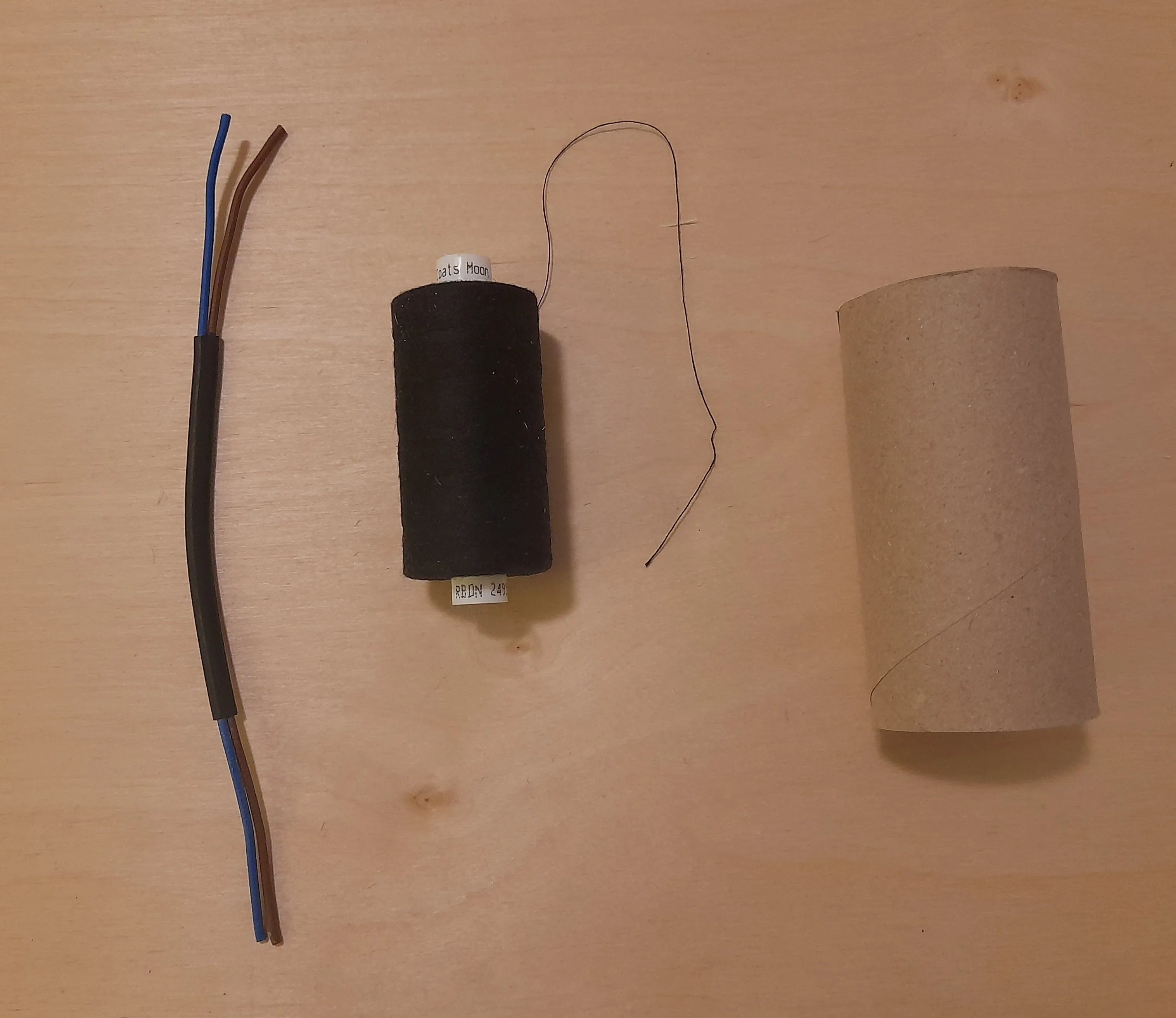
Gather your materials. You need two strands of thick string or stiff wire, a spool of thread, and a toilet paper roll. The wire strands will act as an axle that suspends the spool inside the roll so it can spin freely.
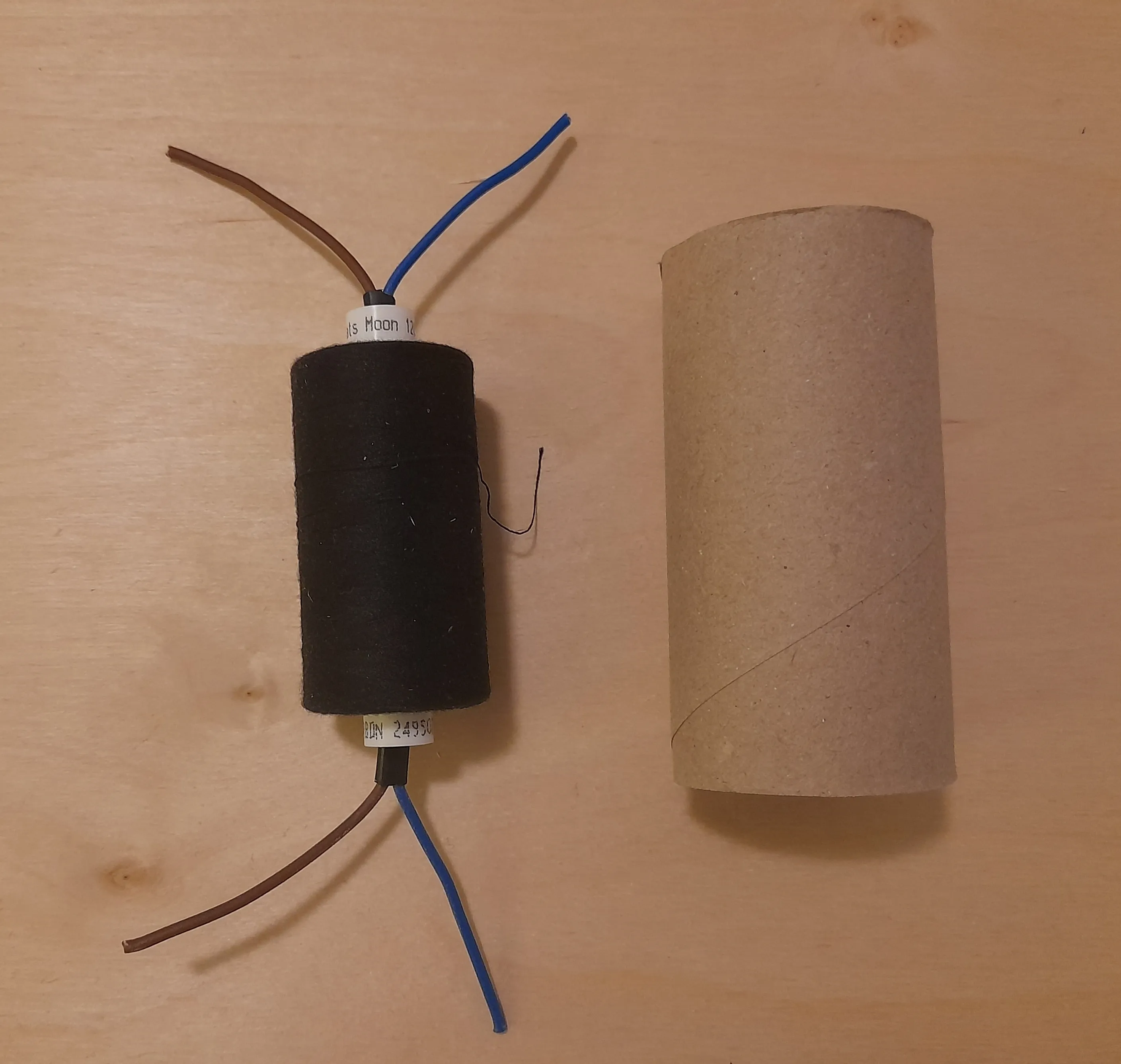
Thread the axle through the spool. Push both strings or wires through the center hole of the spool so they stick out equally on both sides. This forms the axle that will hold the spool suspended inside the cardboard tube.
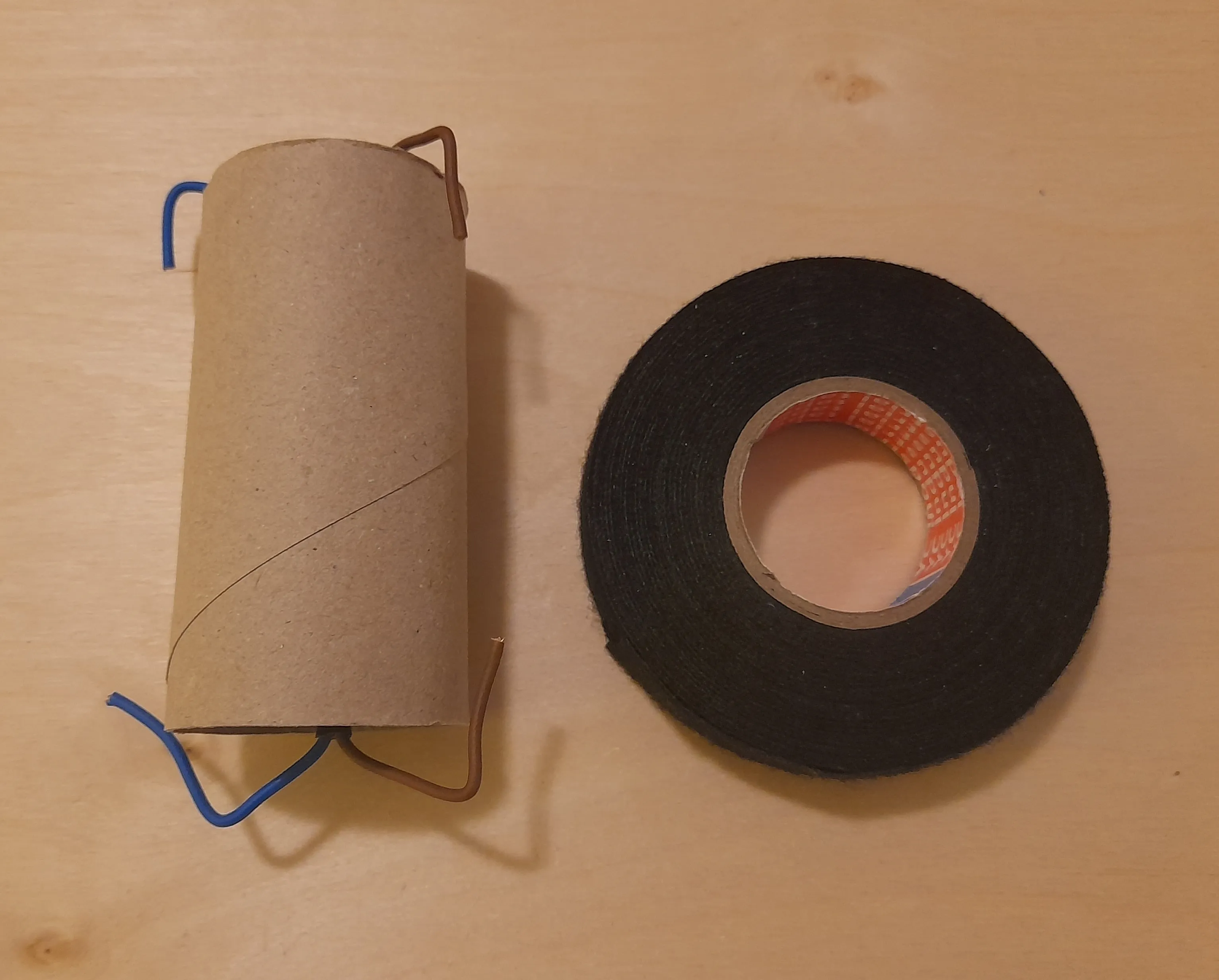
Place the spool inside the roll. Lower the spool into the toilet paper roll. Then fold the four wire or string ends back against the outside of the roll — two on each end. This positions the axle across the diameter of the tube.
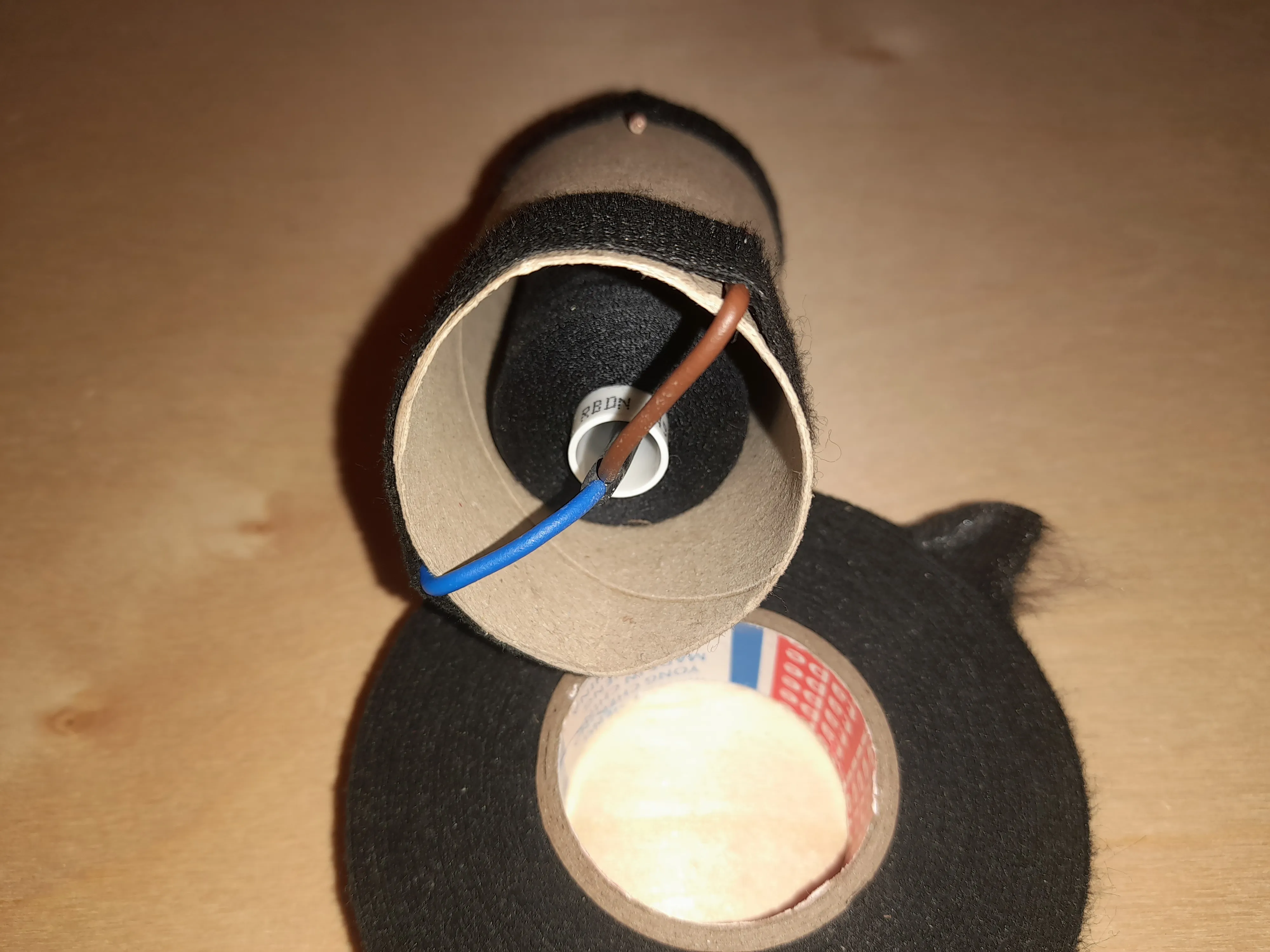
Tape the axle in place. Secure the wire ends to the outside of the roll with tape so the spool is suspended in the middle and can spin freely. Check that the thread doesn't rub hard against the tube wall. When done correctly, the spool is locked in but rotates smoothly as you pull the thread.
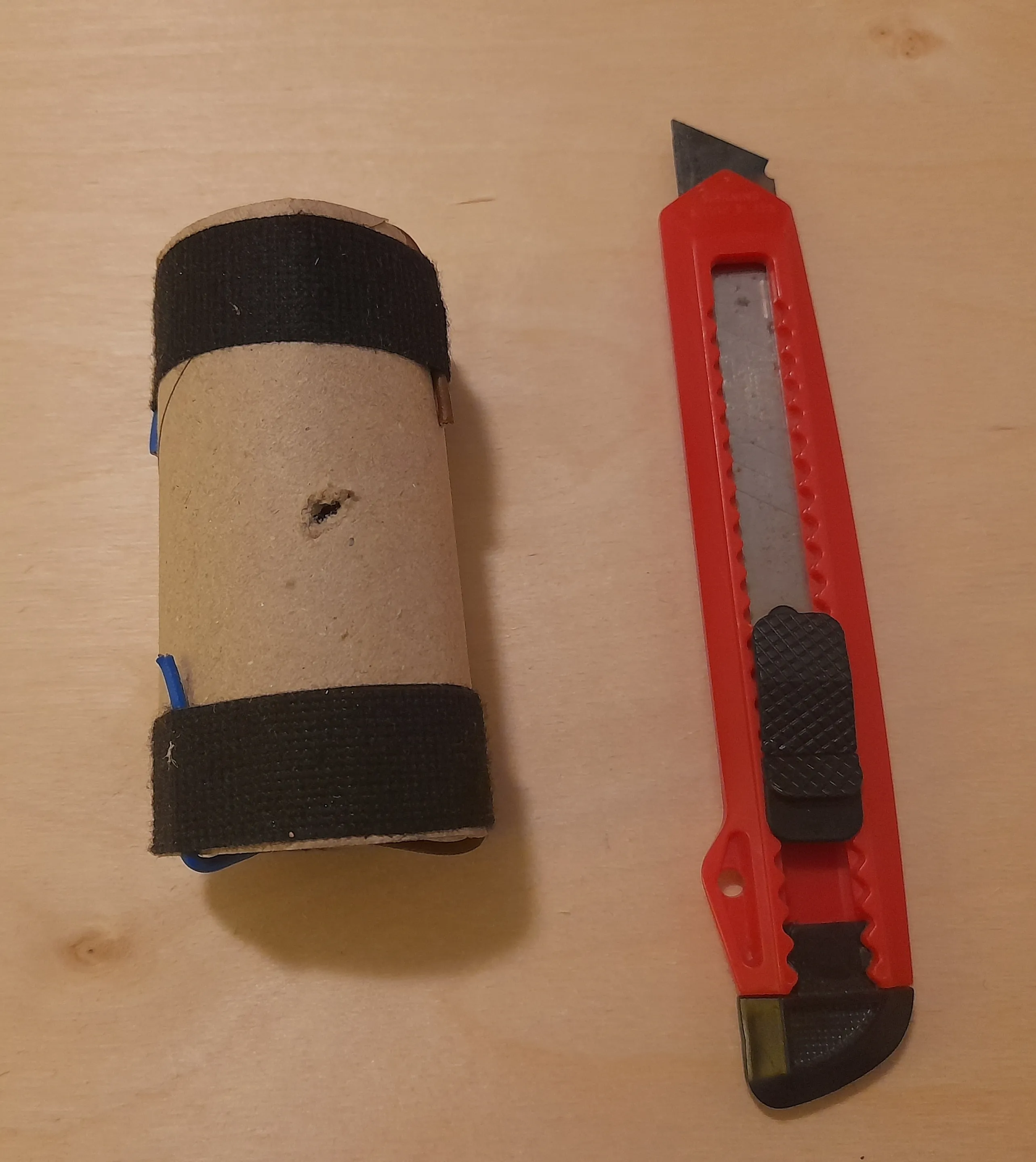
Cut an exit hole. Make a small hole in the side of the paper roll, near one end. This is where the thread will exit the tube and feed into the pen. The hole should be just large enough for the thread to pass through without snagging.
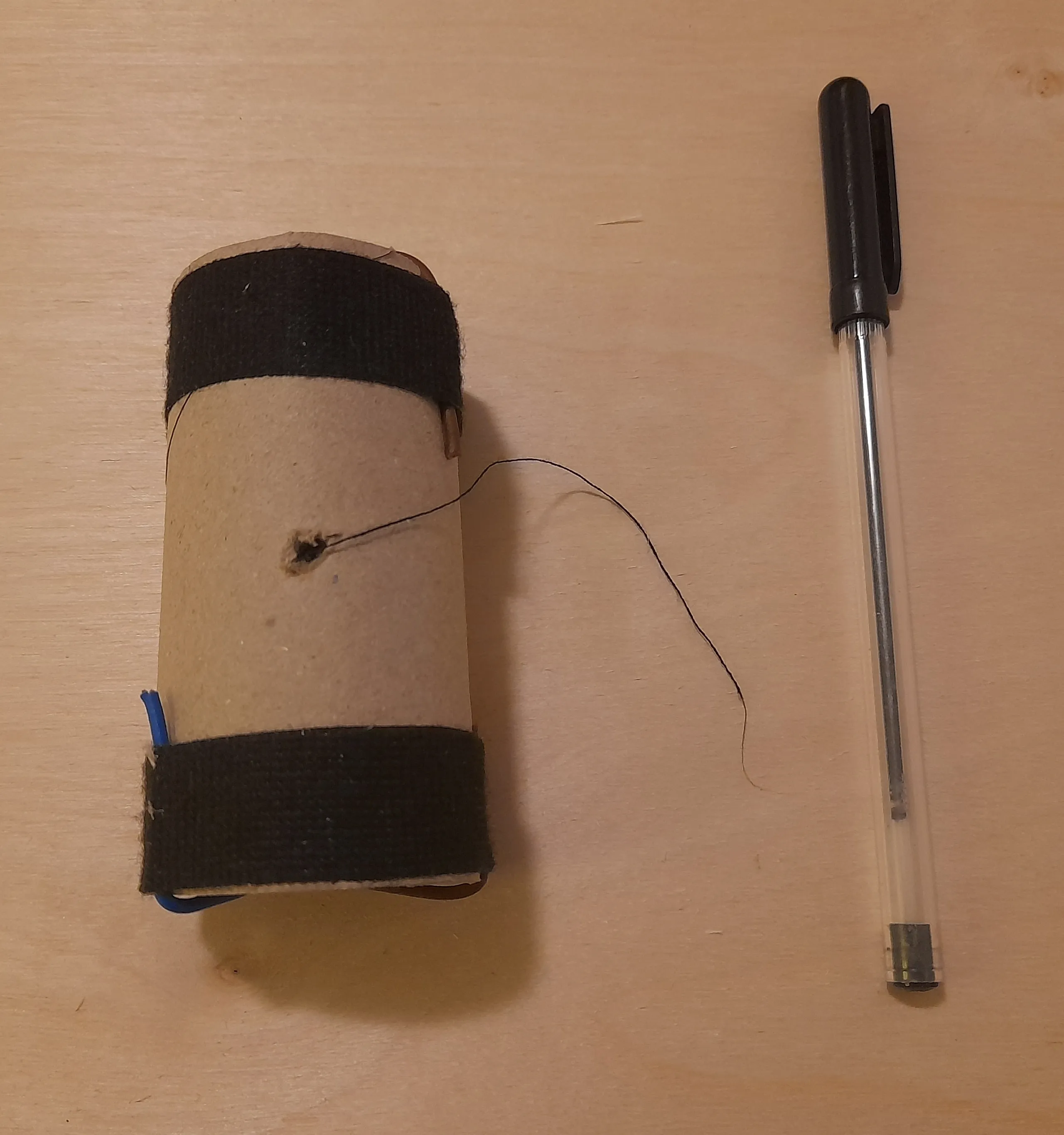
Pull the thread through the hole. Route the thread from the spool out through the hole you just cut. Then find a pen whose barrel is at least as long as the paper roll — you'll attach it along the side so the tip extends to your fingertip when you hold the tool against your wrist.
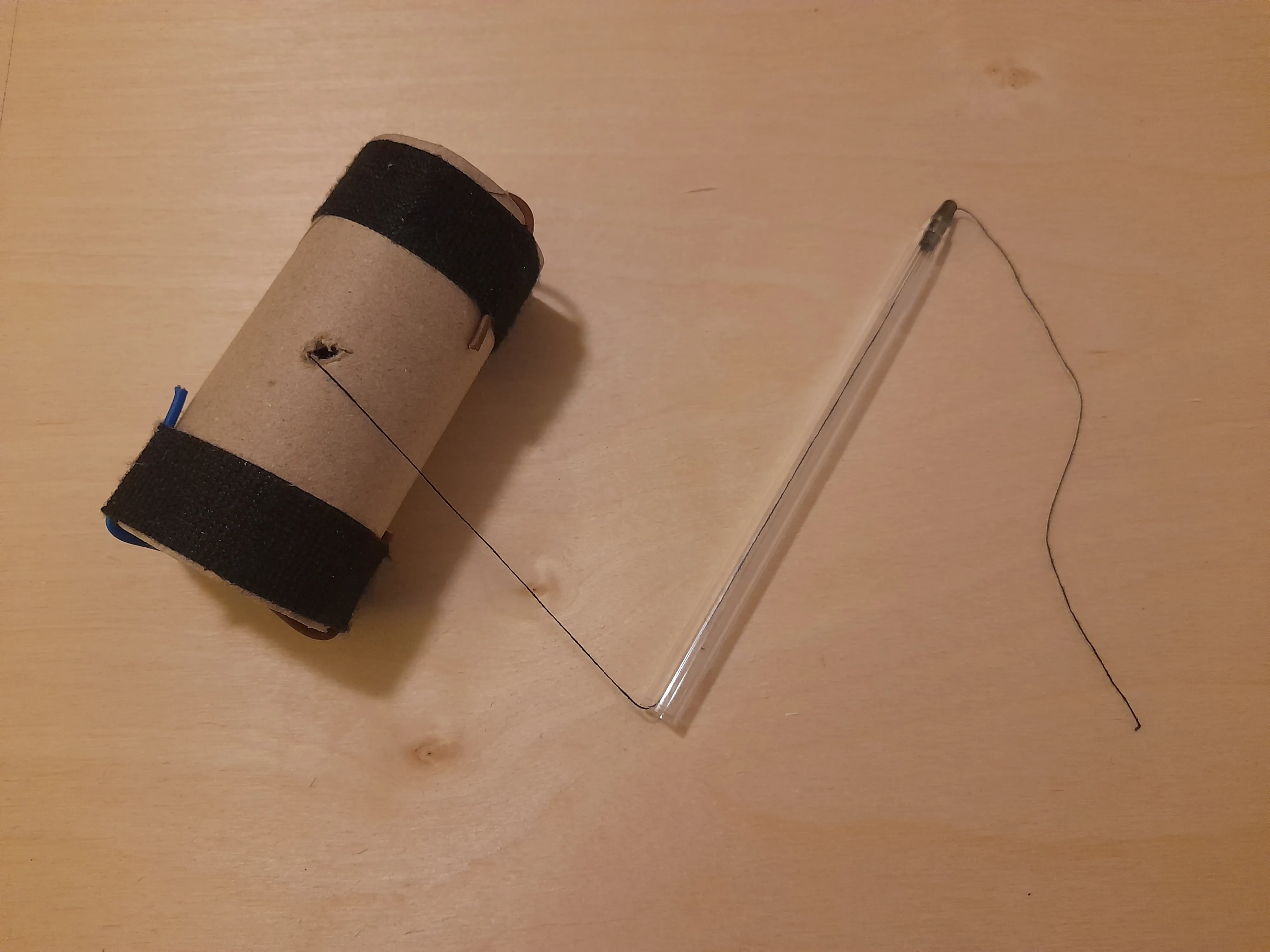
Feed the thread through the pen barrel. Disassemble the pen and remove the ink cartridge, leaving only the hollow plastic barrel. Feed the thread through the barrel from the wide end so it exits through the narrow tip. This guides the thread precisely to a single point — the tip of your index finger.
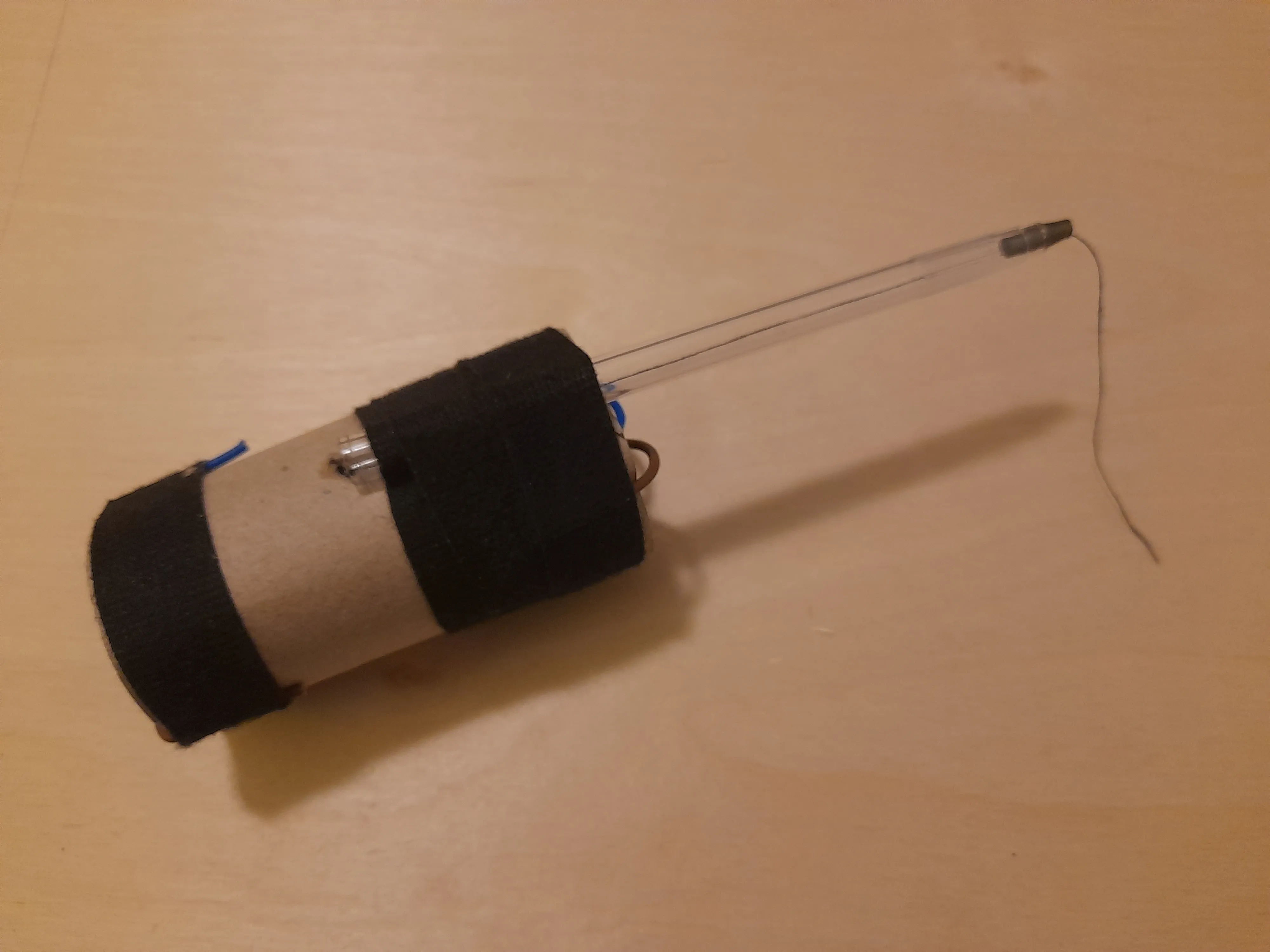
Tape the pen to the roll. Secure the pen barrel along the outside of the toilet paper roll with tape. Position it so the narrow tip extends roughly to where your fingertip will be when you hold the tool against your wrist. The pen is now a fixed guide that aims the thread.
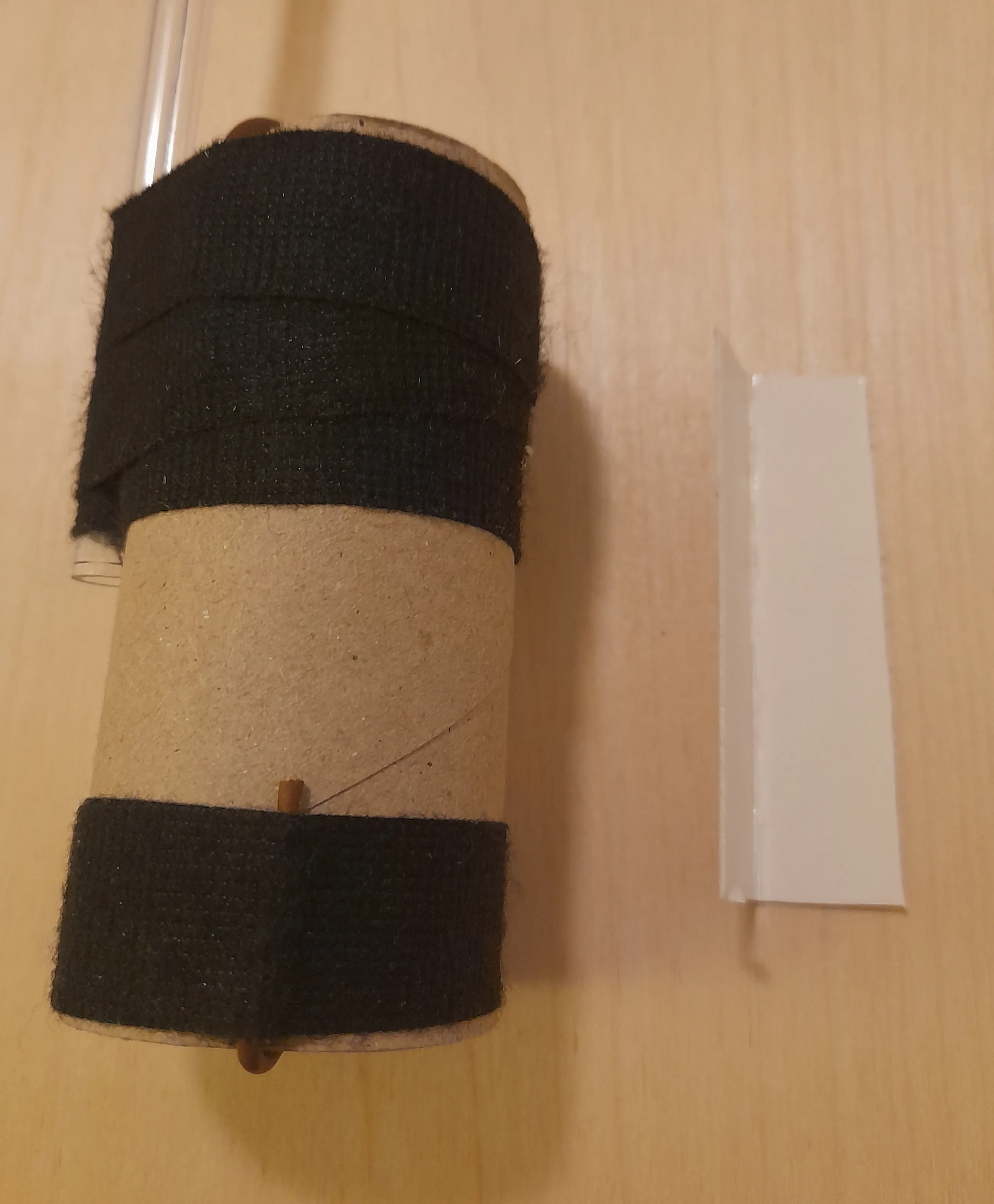
Make the brake. Cut a small rectangle of cardboard and fold it into a V shape. This wedge will press lightly against the spool inside the tube, creating friction that keeps the thread taut as it unwinds. Without it, the spool spins too freely and the thread goes slack.
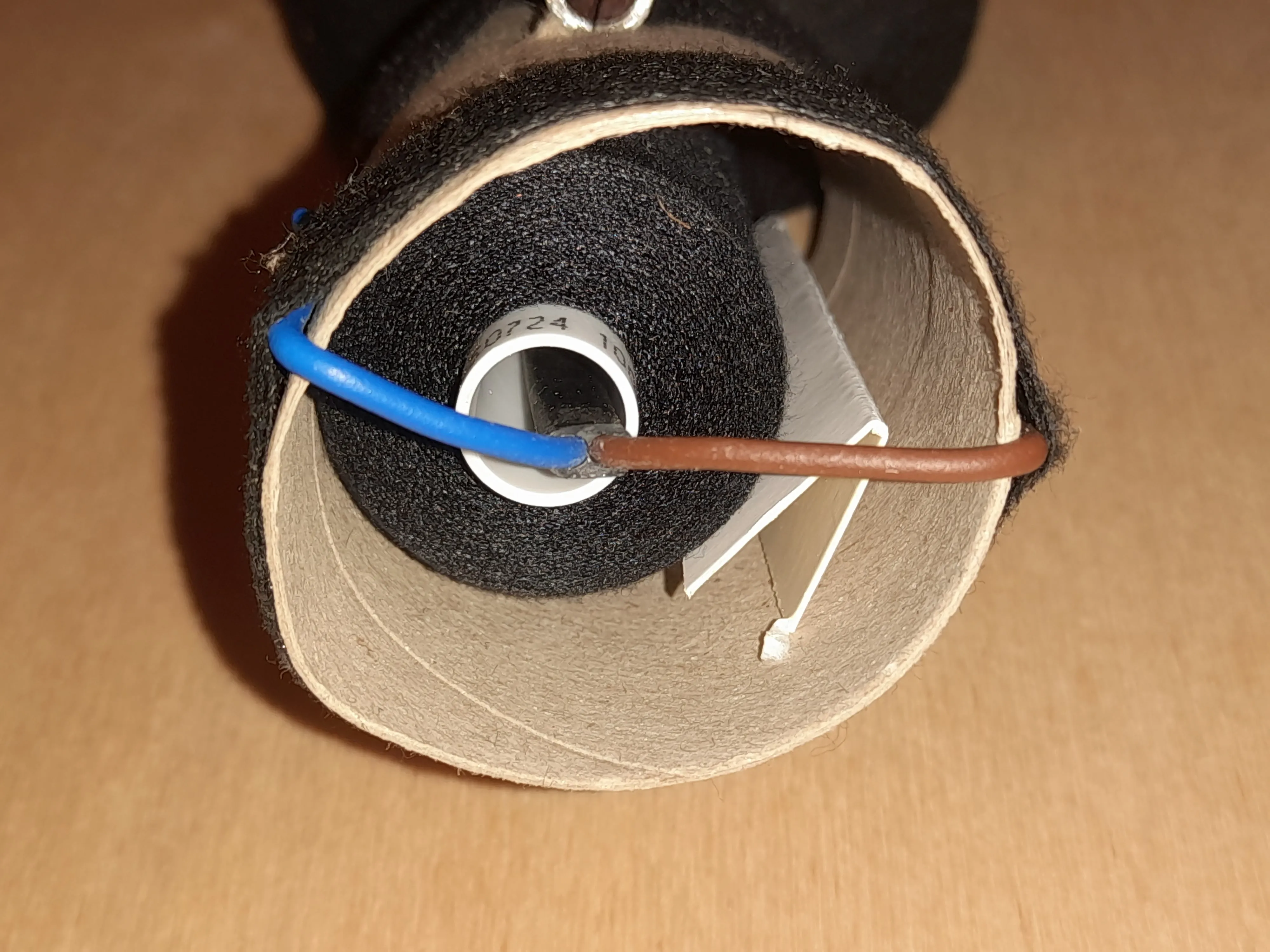
Insert the brake. Slide the folded cardboard into the open end of the roll so it presses gently against the spool. The friction should be light — just enough to stop the thread from going slack on its own. The tool is now complete.
How to use: Hold the tool against your wrist and secure it with a wristband or the cuff of a sleeve. Position the pen tip so it reaches the end of your index finger. From here, weaving is simple — just point your finger at the next pin and the tool does the rest.