About Me
| Name: | Marcell F |
| Time of birth: | In the 90s |
| Lives in: | Hungary |
| E-mail address: | admin [at] stringart.ink |
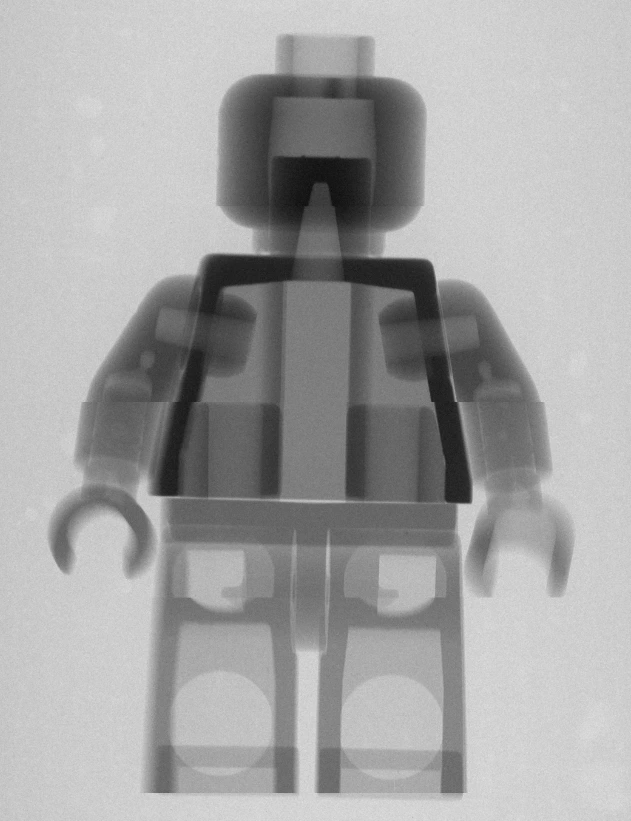
As a kid, I took apart everything I could get my hands on. I wanted to understand what made things work — what moved, and why. Every branch of natural science was interesting: biology, chemistry, physics, all of it. Early on I worked with a hammer, which gradually got refined to a screwdriver. My parents had a big role in steering me toward electronics specifically. Electronic things usually are clean; they don't sit in engine grease, they don't rot if you leave a germination experiment on the shelf for a few weeks, and they don't burn, explode or poison you the way chemicals do. They thought a 9-volt battery wouldn't cause any trouble. They underestimated me.
At one point I wanted to make metallic sodium at home — just to see whether you could actually cut it with a knife like I'd read. I already knew about electrolysis, and I tried it with water, so I figured the next step should be salty water. Table salt, I figured, should work fine. My 9-volt battery and iron-nail electrodes let me down, but with enough persistence, diligence, and trips to the library, I managed to get closer to poisoning myself — and eventually figured out the electrodes were the problem. I had no platinum available, but salvaged carbon rods from batteries worked just fine. Those could actually split the salt. Chlorine gas built up in the closed container; the sodium turned straight into NaOH in the water. No metallic sodium, but I learned a lot when I opened the lid. Fortunately, I was in a semi-open space and only got an unpleasant lungful.
The enthusiasm never went away. There were always more ideas: giant electric arcs, a home-built X-ray machine, and a fluoroscope to examine things myself. I went to study electronics, and since the most interesting trade at the time — TV repairman — was already a dying profession, I went on to electrical engineering at university. Every field of science still interested me, but none of them in great depth. There's still not any topic that I master, but I know a little about everything and due to this I turned out as a quite okayish engineer.
I studied telecommunications because I liked how many interesting things happened when we changed from fixed DC voltages to AC, where voltages became time-dependent, and I wanted to keep going — into microwave signals where they also become position-dependent. I also genuinely liked the Smith chart. There's something about neatly arranged black figures on a white base; it's probably why I collect slide rules, though where that comes from is a mystery.
Because of the telecommunication specialization, at my first job I started to work with IP network equipment — routers, switches, data centers. It was good to see how the internet actually works: configuring routers where a single typo could reroute half a country's traffic, and understanding that a netmask isn't always 255.255.255.0 like most people assume. The on-call shifts and rotating schedules were less good.
Then I spent several years in the semiconductor industry working with what is probably the world's most expensive ohmmeter — a machine the size of several large cabinets that measures the sheet resistance of silicon wafers. Only the top few micrometers matter for chip manufacturing, and the measurement is contactless, so it doesn't contaminate the surface. Niche, but genuinely interesting.
Currently, I'm assembling and calibrating medical imaging devices — CT, PET, and SPECT cameras — for mice and rats. The working principle is the same as with human cameras, but these are a bit smaller, and there's a lot less fuss about radiation damage for test animals. At the job interview, they reassured me that veterinary medicine hasn't advanced quite that far; these are used in preclinical drug trials where rodents receive candidate compounds. There's a lot to learn here: X-ray physics, isotopes, scintillator crystals, and photomultiplier tubes. Many of my side projects draw directly from what I come across at work.
I think that's probably enough extra radiation dose for one career.
I know what's inside every household appliance, and I have taken apart plenty of interesting industrial equipment. Now, I should go on an adventure to find even more industrial stuff to take apart, learn from, and use that knowledge to build something new.
HAM radio, listening to distant radio stations — Photography, especially large format photography, and seeing the unseeable: UV, infrared, heat, or X-rays — High voltage experiments with Tesla coils and other things that make arcs — Inorganic chemistry and anything that can teach you something about how the world works around you.
I hold the necessary qualifications to handle and use radioactive materials and X-ray units, as well as to work with high-voltage electrical appliances. Beyond primary school classes, I have no formal education in chemistry; however, I always research every topic thoroughly before experimenting and consult with professional chemists. Similarly, my formal training in mechanical engineering was limited to what is typically required for an electrical engineer.
Except for the "Knitter" project, I strongly advise against attempting to replicate the experiments shown on this site. While I aim to document every potential hazard and provide clear warnings on my Other Projects pages, it is possible that even I am unaware of certain risks associated with these experiments.
The content on this website is for informational and educational purposes only. Performing experiments involving high voltage, radiation, or chemicals is inherently dangerous. I assume no liability for any injuries, legal issues, or damage to property resulting from the use or misuse of the information presented here. By continuing to browse this site, you acknowledge that any action you take based on this content is strictly at your own risk.