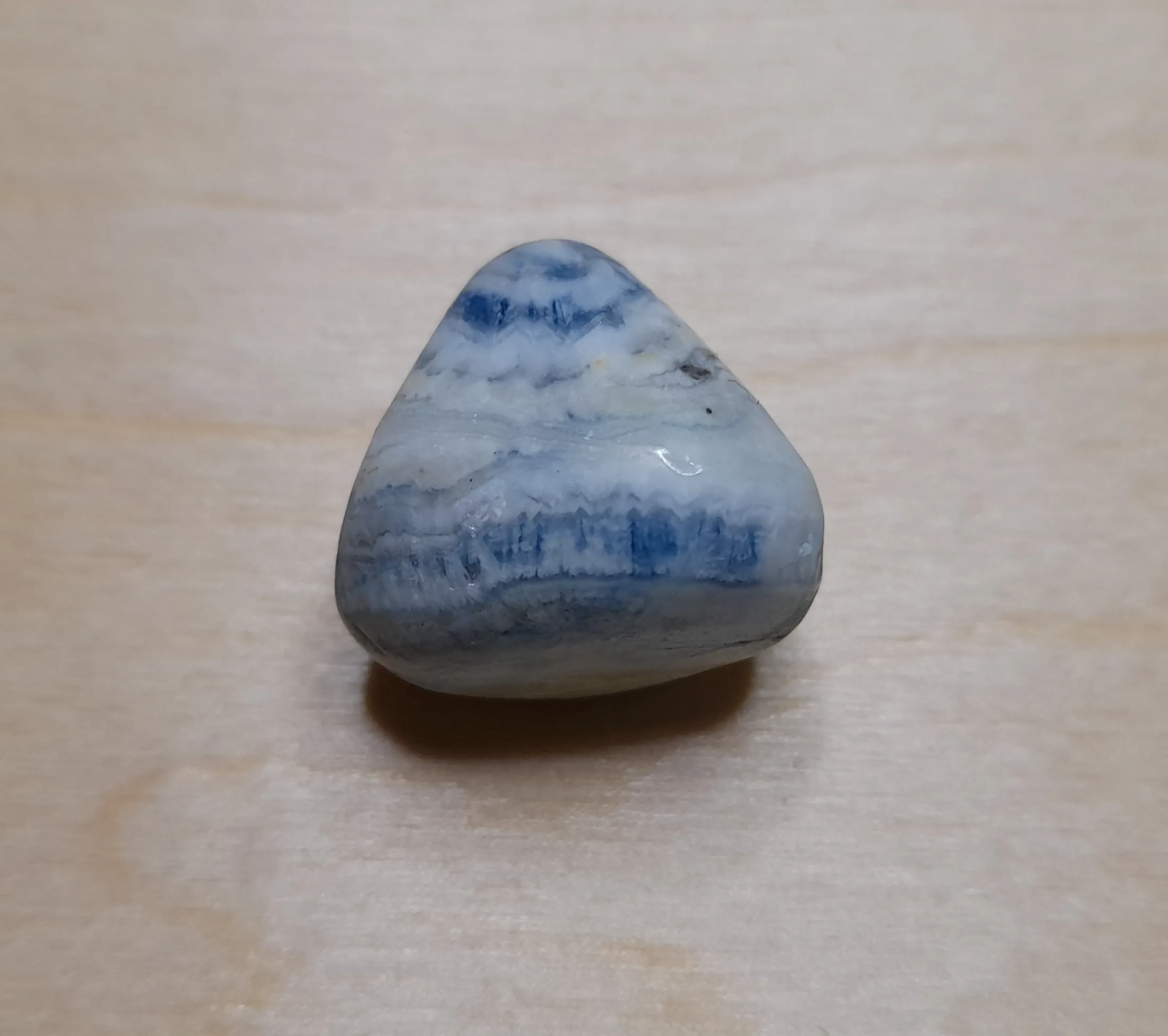
It took a long time to find a recipe for making Calcium Tungstate ($CaWO_4$), known in mineralogy as Scheelite. It is naturally fluorescent under X-rays, and the precursors are relatively accessible for a hobbyist chemist. I hoped I could synthesize it even with my limited chemistry skills. The picture shows Scheelite purchased from a webshop selling healing stones. Pardon me—minerals.
This was the original recipe that I found: Mix 10.6g of sodium carbonate (soda, $Na_2CO_3$) and 30.3g of potassium nitrate (saltpeter, $KNO_3$), then melt the mixture in a ceramic crucible (if you don't have one, then in smaller batches in a test tube), gradually add 10g of finely ground tungsten. Tungsten can be purchased in a pure state at a welding specialist shop. One strand (green marked) of WP00 tungsten electrode is more than enough. This cannot be cut up with pliers, as it is tough and shatters easily; rather, it should be wrapped in cloth and broken with a hammer. Stir the liquid mixture, e.g. with another stick. When the melt has become thick enough, pour it onto a tile and let it cool. Then dissolve it in 100ml of water. If the solution is not clear, filter it or settle it.
Then pour enough hydrochloric acid ($HCl$) onto 20g of chalk or slaked lime to dissolve it, then add enough chalk so that it cannot dissolve in it (there should be no excess hydrochloric acid), then make up to 100ml, then filter off the remaining chalk (calcium carbonate, $CaCO_3$). Pour the two clear solutions together. At this point, a calcium tungstate ($CaWO_4$) precipitate, which is poorly soluble in water, separates. Filter this and then dry it.
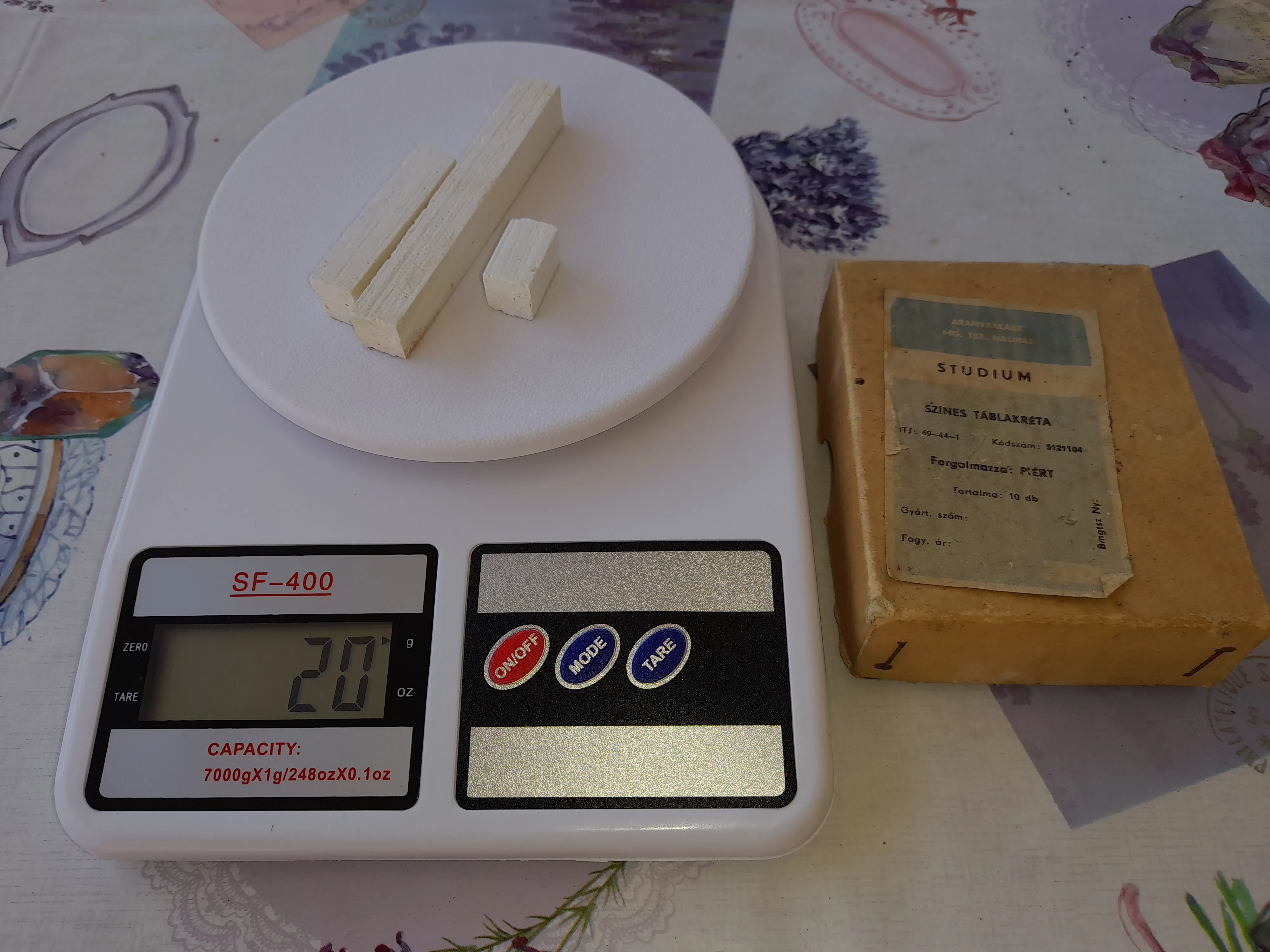
The objective of the second part of the recipe is to produce $CaCl_2$ from chalk and hydrochloric acid ($HCl$):
$$CaCO_3 + 2HCl \rightarrow CaCl_2 + H_2O + CO_2$$
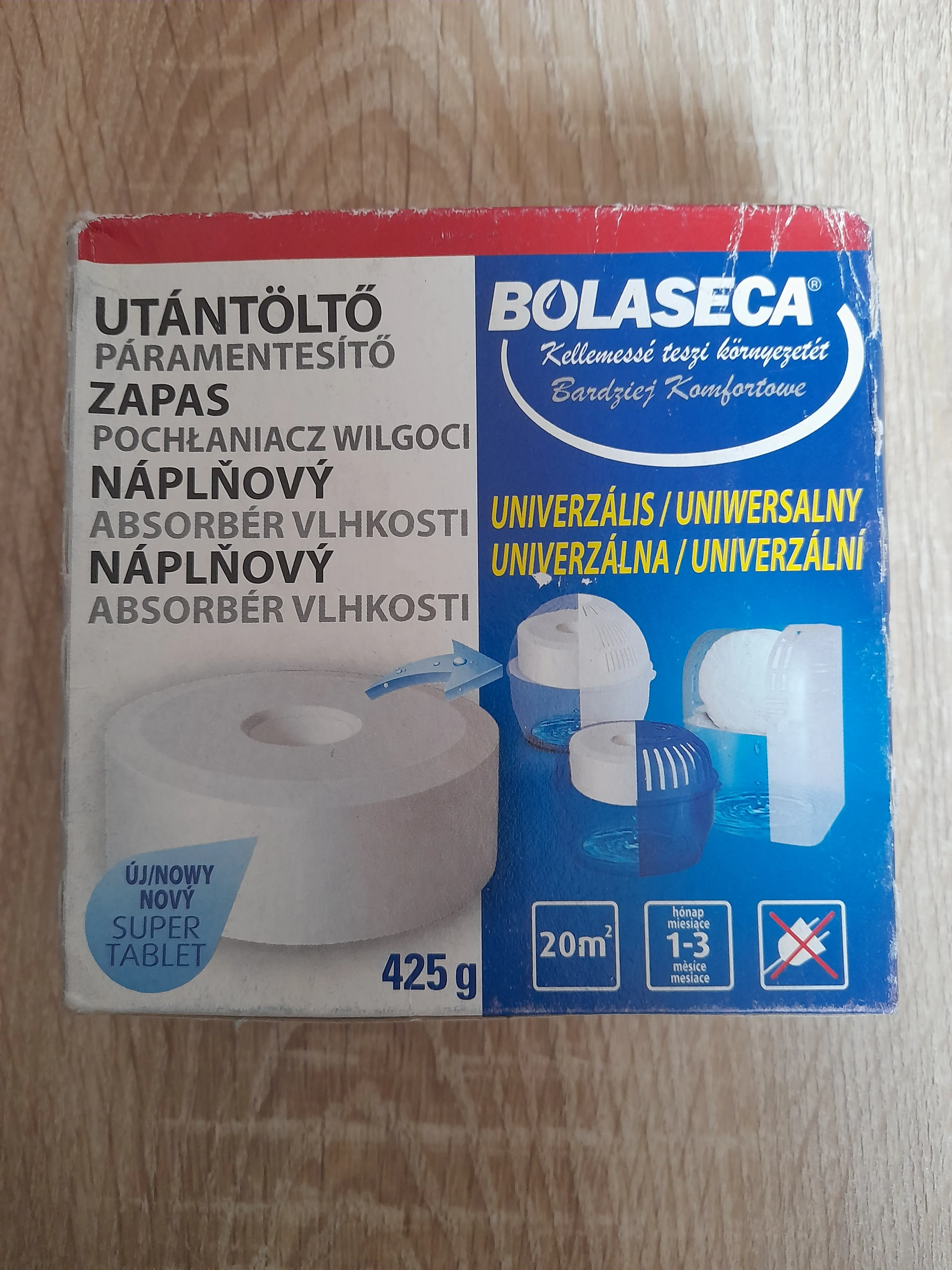
We can produce $CaCl_2$ this way, but I had a better idea. Instead of reacting chalk with acid—which is messy and hazardous to the eyes—we can simply buy anhydrous Calcium Chloride sold as a chemical dehumidifier (e.g., Ceresit Stop). Just ensure it is fragrance-free and pure white.
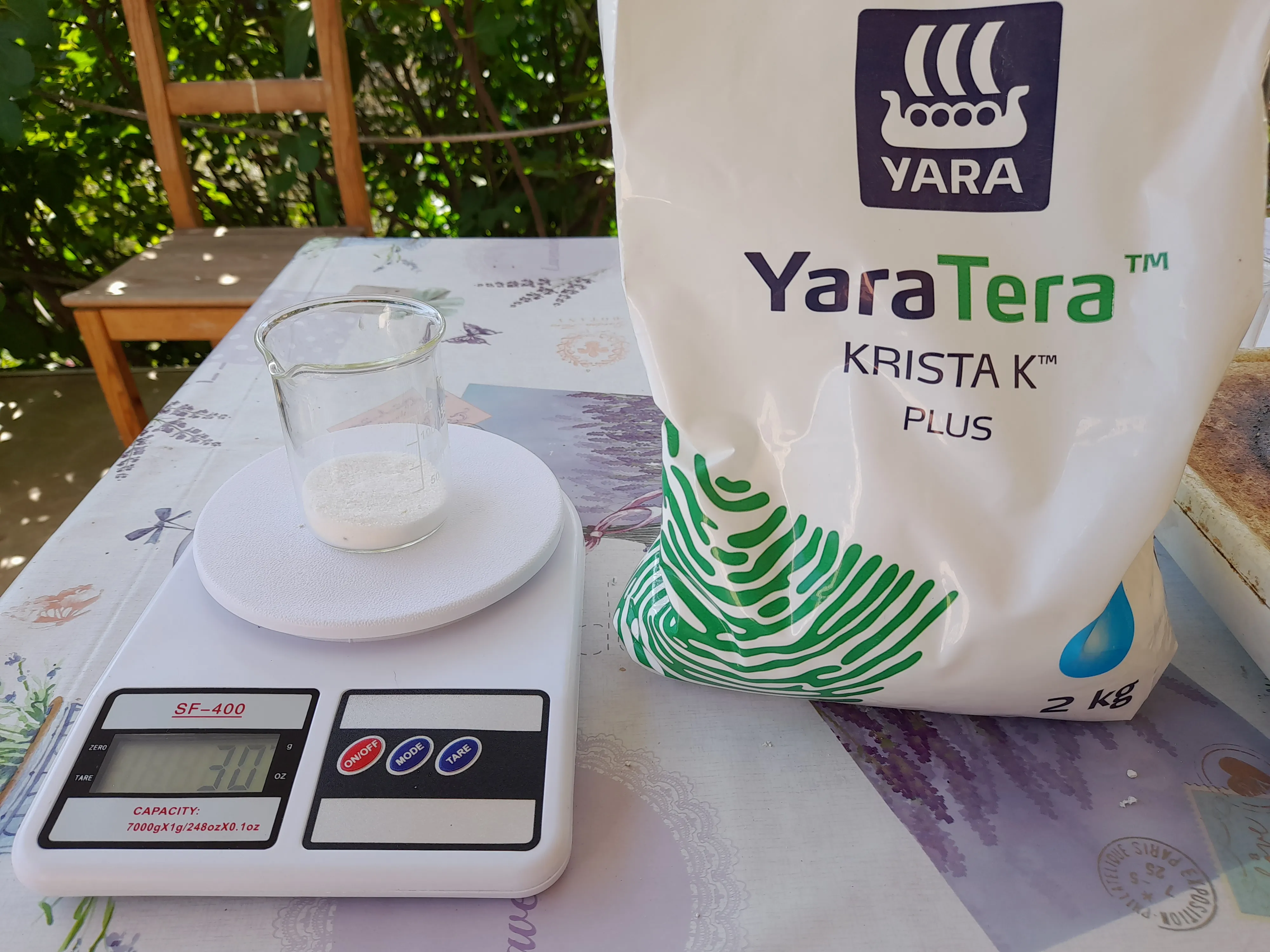
Now, back to the beginning of the recipe: potassium nitrate ($KNO_3$), commonly known as saltpeter. It is easy to find if you know where to look; YARA Krista K fertilizer is almost pure potassium nitrate. Saltpeter is a strong oxidant—handle it with care, as it can corrode metal and become explosive when mixed with fuels. If it seems impure, recrystallize it in distilled water. Be careful when using heat to dry saltpeter.
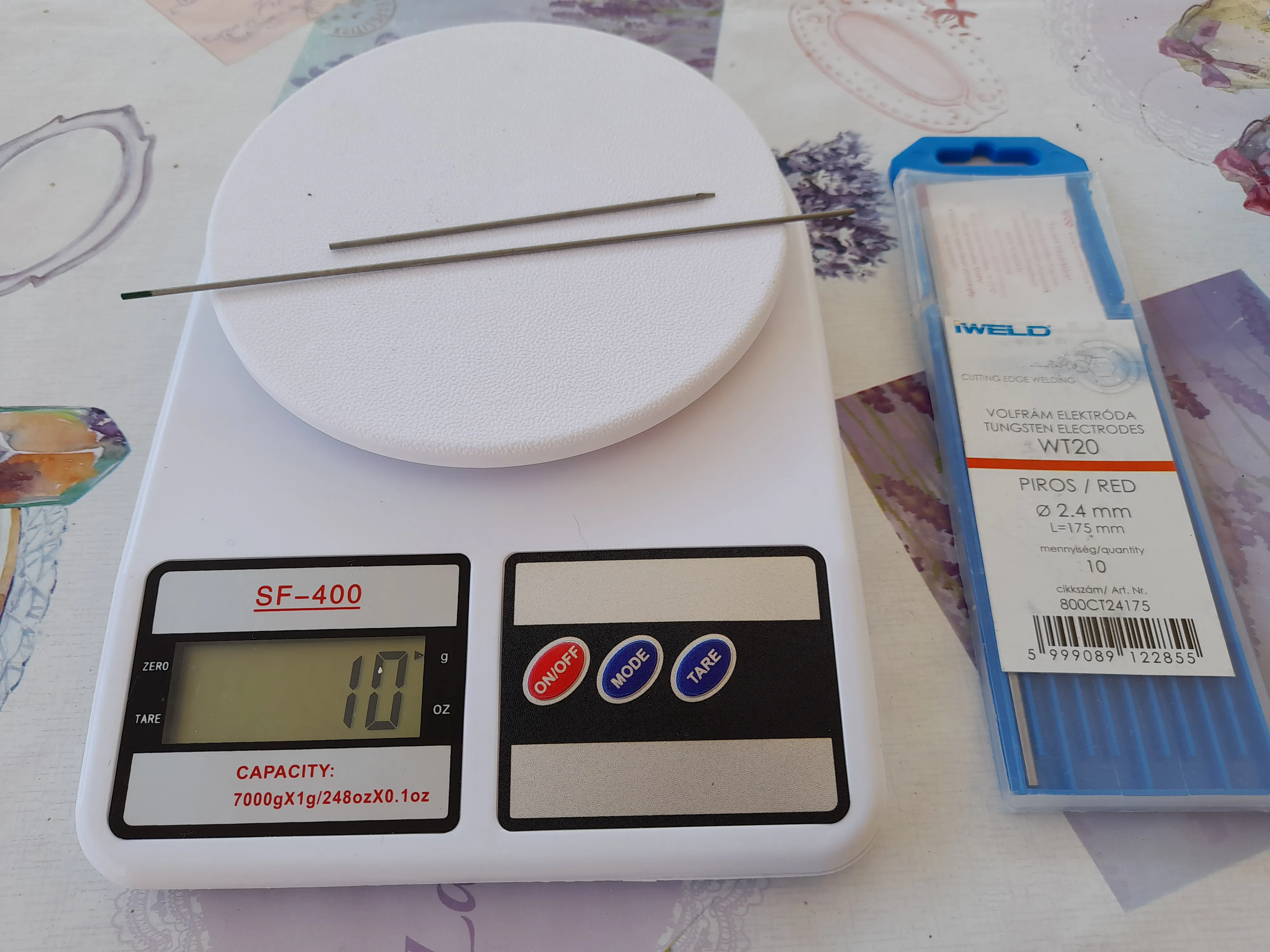
You will need tungsten in powdered form, which can be found online. Powdered tungsten is the best choice because it reacts faster, but as an alternative, you can use a TIG welding electrode. TIG stands for Tungsten Inert Gas. You must be careful to choose the right electrode; the color markings indicate different additives. For example, a red marking means it contains thorium to improve the welding arc. Thorium is slightly radioactive—this is the worst choice if you plan to powderize it or if there is any risk of inhaling fumes during the reaction. I suggest looking for the green marking, which indicates pure tungsten.
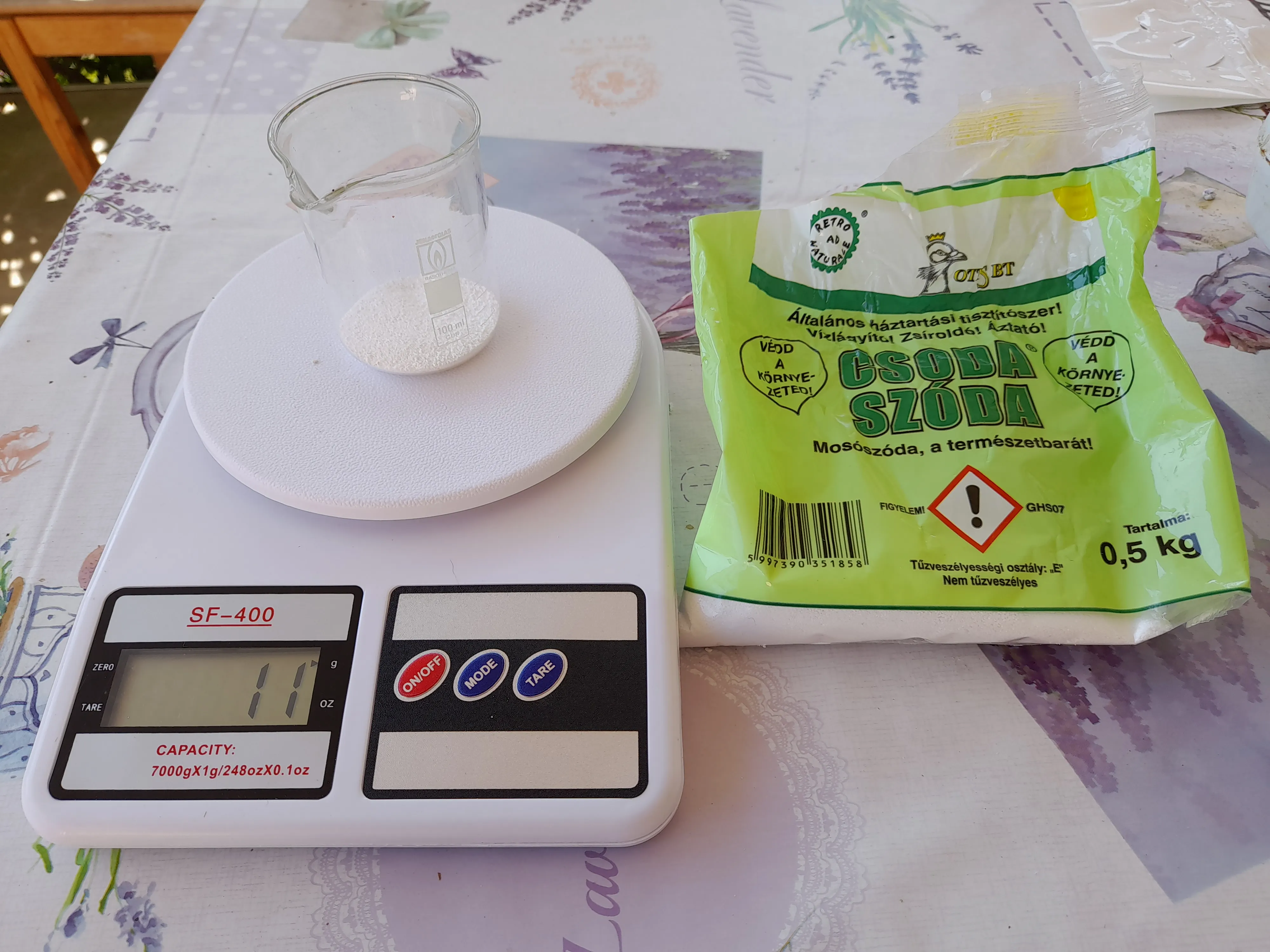
The next material is sodium carbonate, also known as washing soda or soda ash. It is a cleaning agent; do not confuse it with sodium bicarbonate (baking soda), which is a food additive. Although you can produce sodium carbonate from baking soda via calcination (heating it to around 200°C for an hour), I recommend just buying it directly.
You will also need distilled water, various containers, and glassware for diluting, mixing, heating, and precipitating your material.
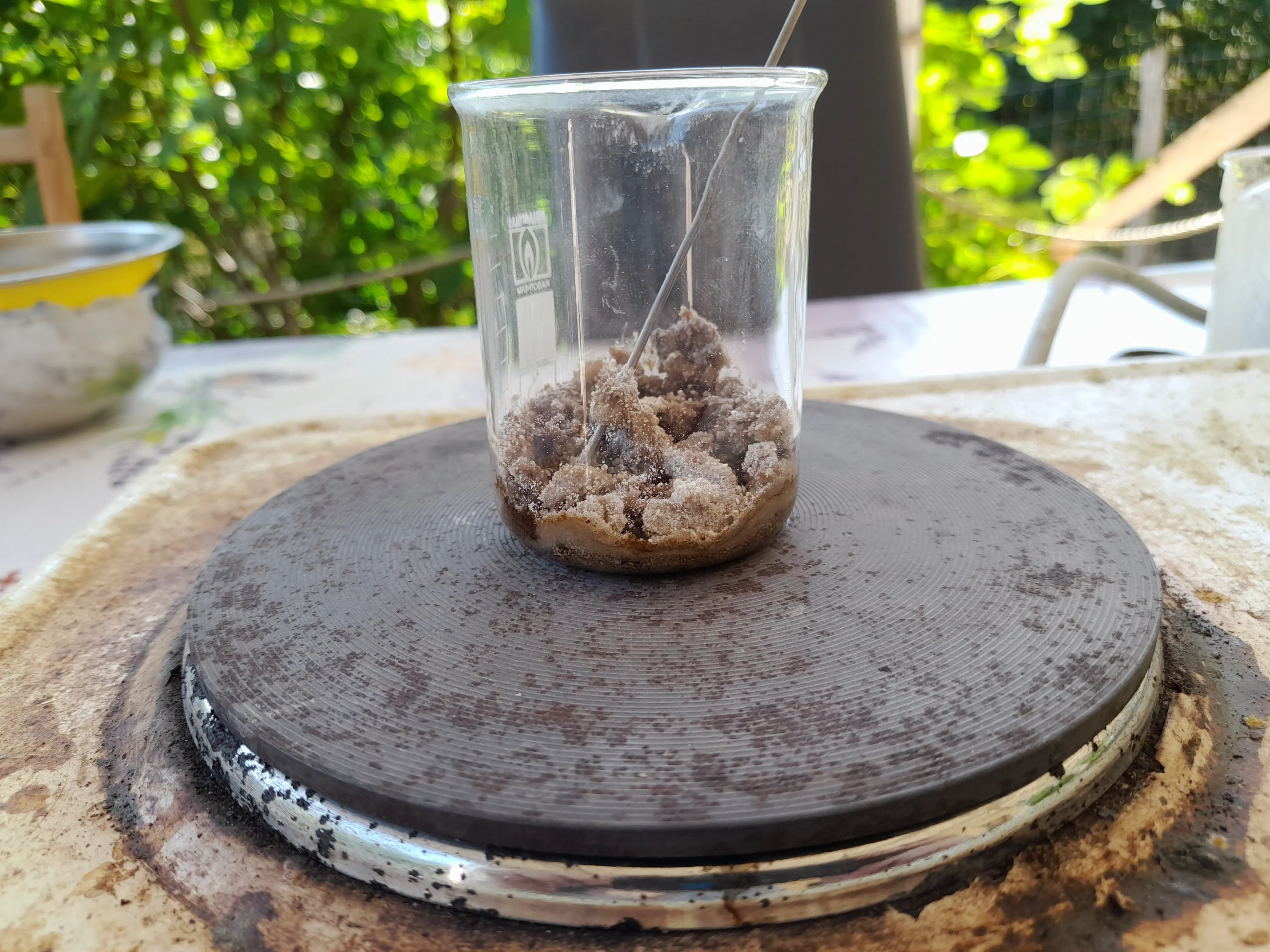
I mixed 30.3g of saltpeter with 10.6g of sodium carbonate, added some tungsten, and started heating. Some of the material melted and turned brownish, but it was clear that my electric heater couldn't reach a high enough temperature.
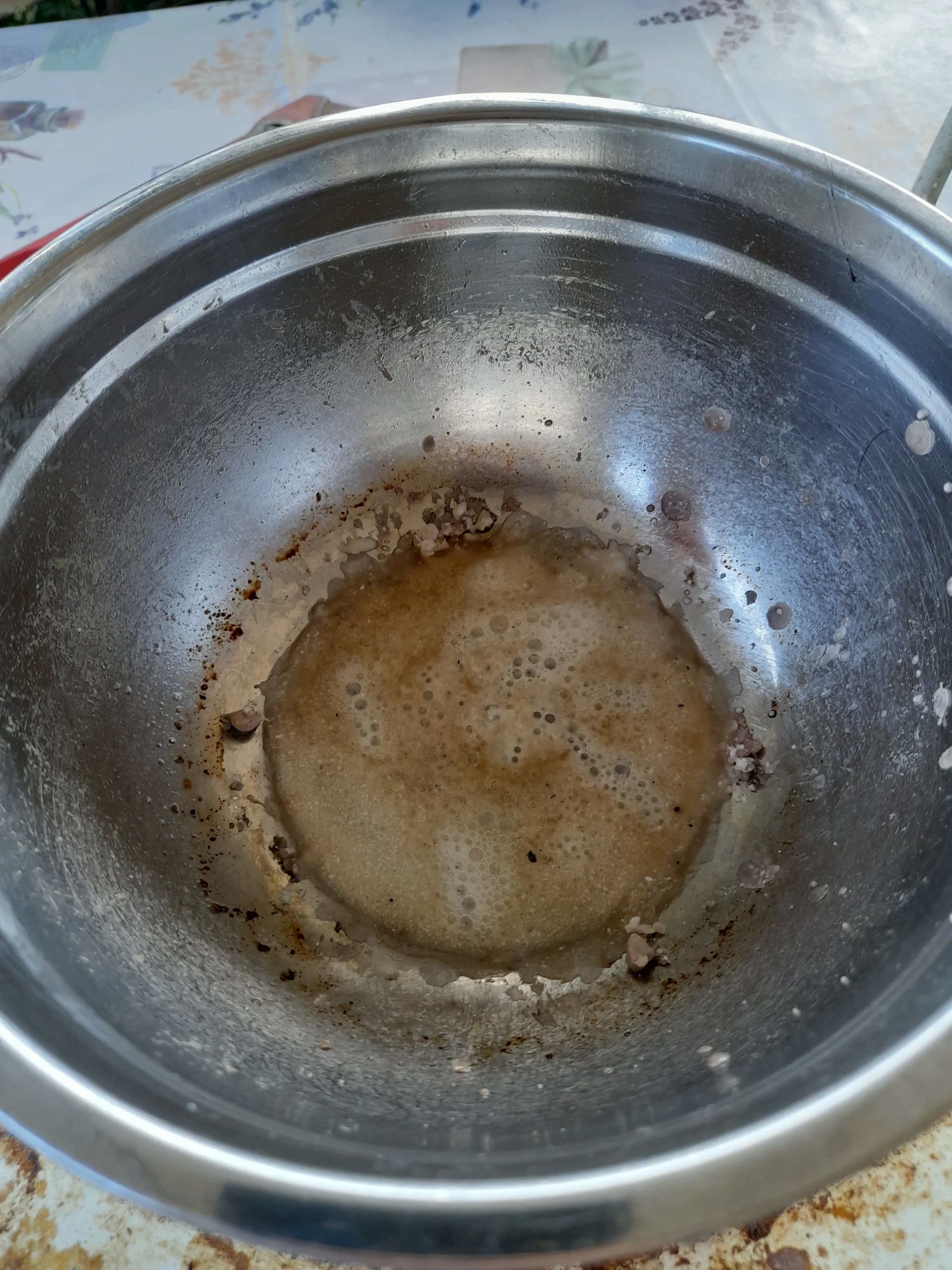
Ideally, a chemist uses inert labware that doesn't participate in the reaction or contaminate the materials. However, if you lack professional equipment, you might feel a slight sting of guilt using stainless steel kitchenware. That’s just your chemist pride messing with you. Forget pride.
Progress was slow because I didn't use powdered tungsten. I used broken TIG electrodes, which have a very small surface area for the reaction. In the video, you can see the tungsten slowly bubbling in the molten saltpeter and sodium carbonate mixture.
The reaction took ages, so I eventually turned off the heater and let the mixture solidify. When I returned, I broke apart the solidified mass to see how much tungsten remained. I restarted the heating, and this time it reached a much higher temperature because there was less material in contact with the steel pan. Bubbling turned into fizzing, and the tungsten began to glow red-hot as it dissolved.
This is known as the flux method. The saltpeter/sodium carbonate mixture acts as a molten flux to dissolve the tungsten. The saltpeter oxidizes the tungsten to $WO_3$, which then reacts with the sodium carbonate to form $Na_2WO_4$ and $CO_2$. This oxidation is highly exothermic. I expected a fire or even an explosion, but the tungsten heating to a glow and dissolving in seconds caught me by surprise. A good chemist would never do a flux reaction in this way. I'm an electrical engineer, and I was able to react all of my tungsten this way. So it's good enough for me. However, using powdered tungsten added slowly allows for much better control. BE CAREFUL: if it burns too vigorously, it can produce nitrogen oxides, and nitrogen oxides are highly toxic and no laughing matter.
This is known as the flux method. The saltpeter/sodium carbonate mixture acts as a molten flux to dissolve the tungsten. The saltpeter oxidizes the tungsten to $WO_3$, which then reacts with the sodium carbonate to form $Na_2WO_4$ and $CO_2$. This oxidation is highly exothermic. I expected a fire or even an explosion, but the tungsten heating to a glow and dissolving in seconds caught me by surprise. A good chemist would never do a flux reaction in this way. I'm an electrical engineer, and I was able to react all of my tungsten this way. So it's good enough for me. However, using powdered tungsten added slowly allows for much better control. BE CAREFUL: if it burns too vigorously, it can produce nitrogen oxides, and nitrogen oxides are highly toxic and no laughing matter.
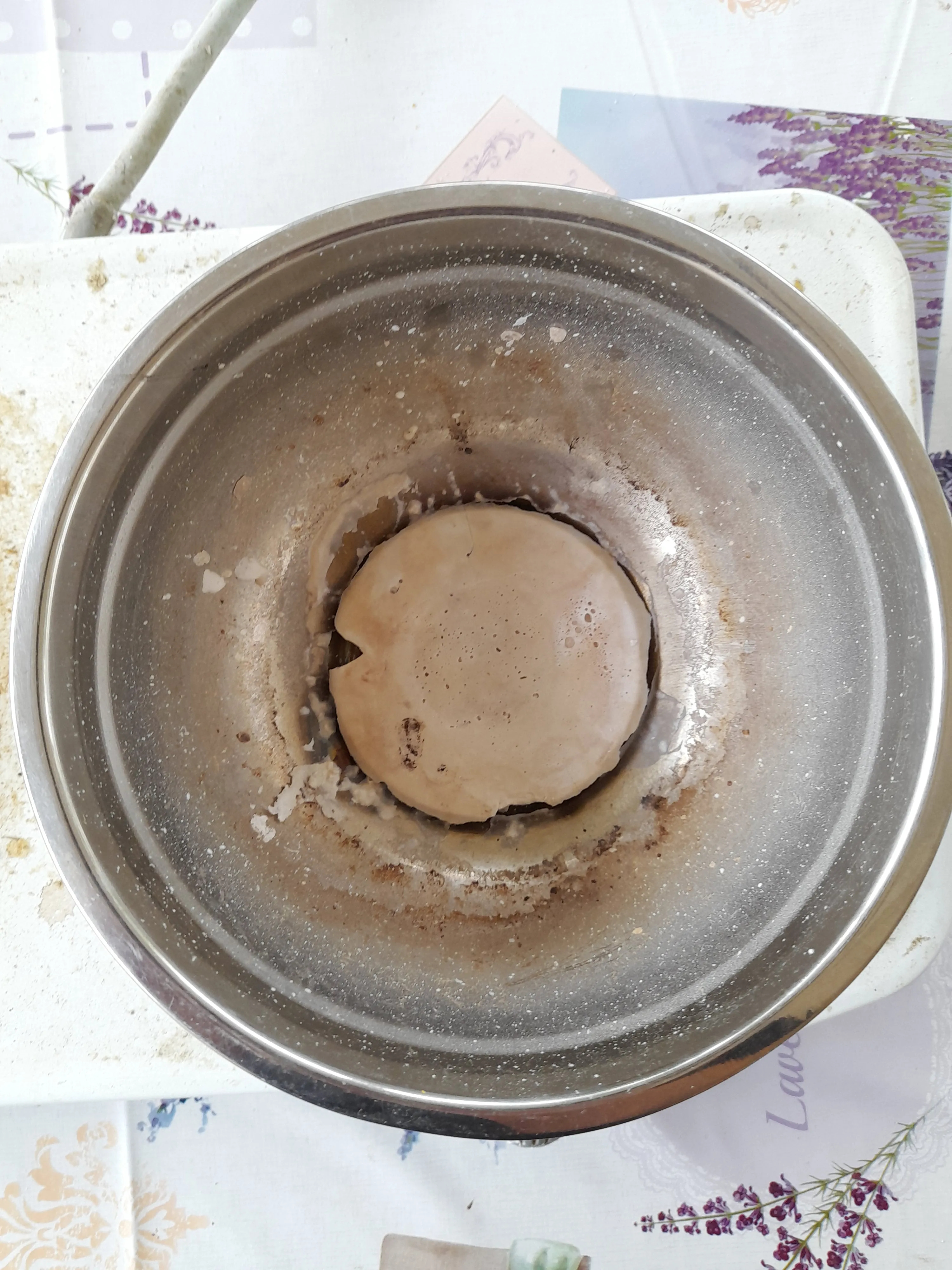
Once the bubbling stopped, I let it cool and broke the material into smaller chunks.
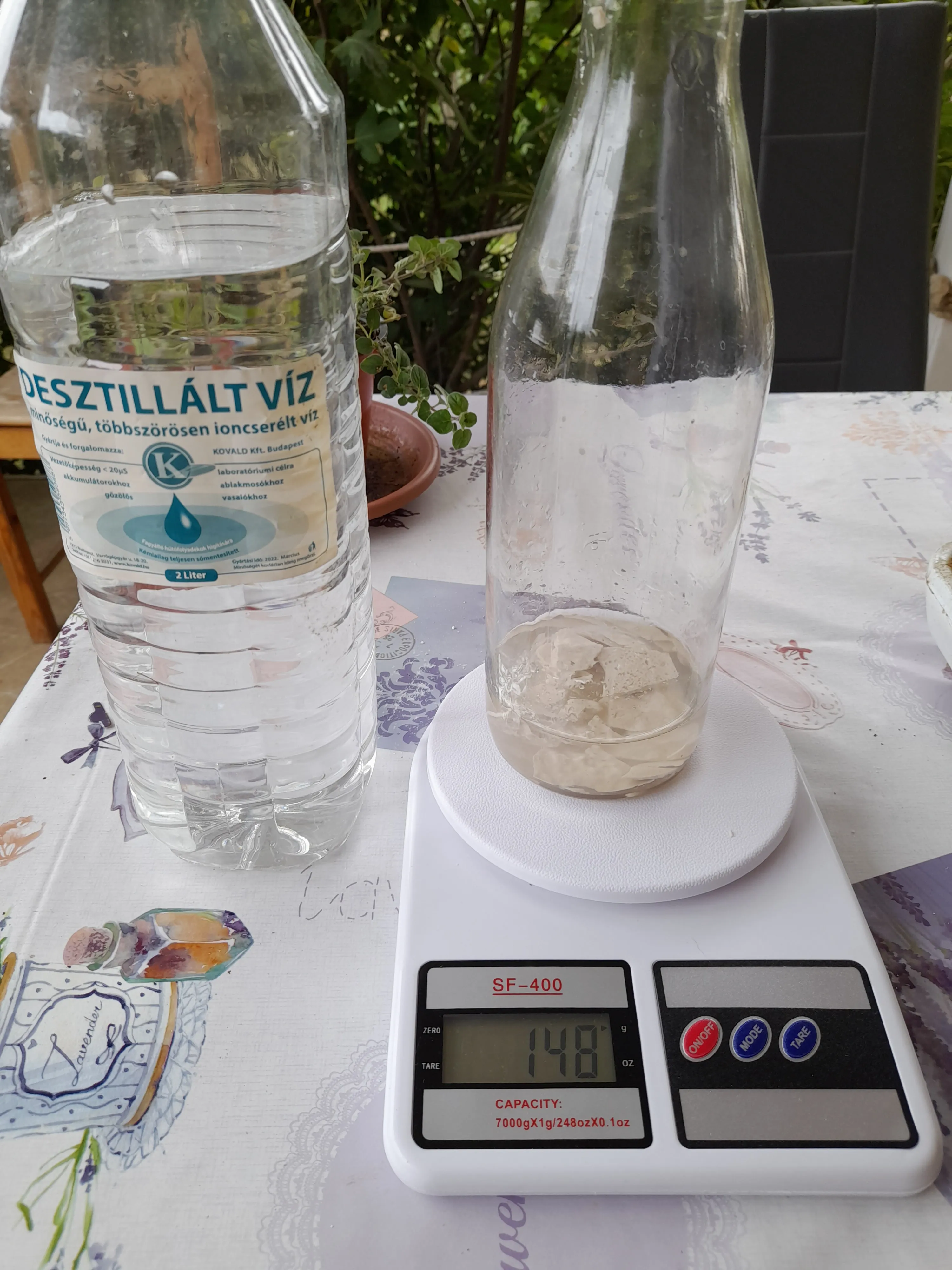
I placed the chunks in a glass bottle and dissolved them in distilled water. I then filtered out the insoluble parts.
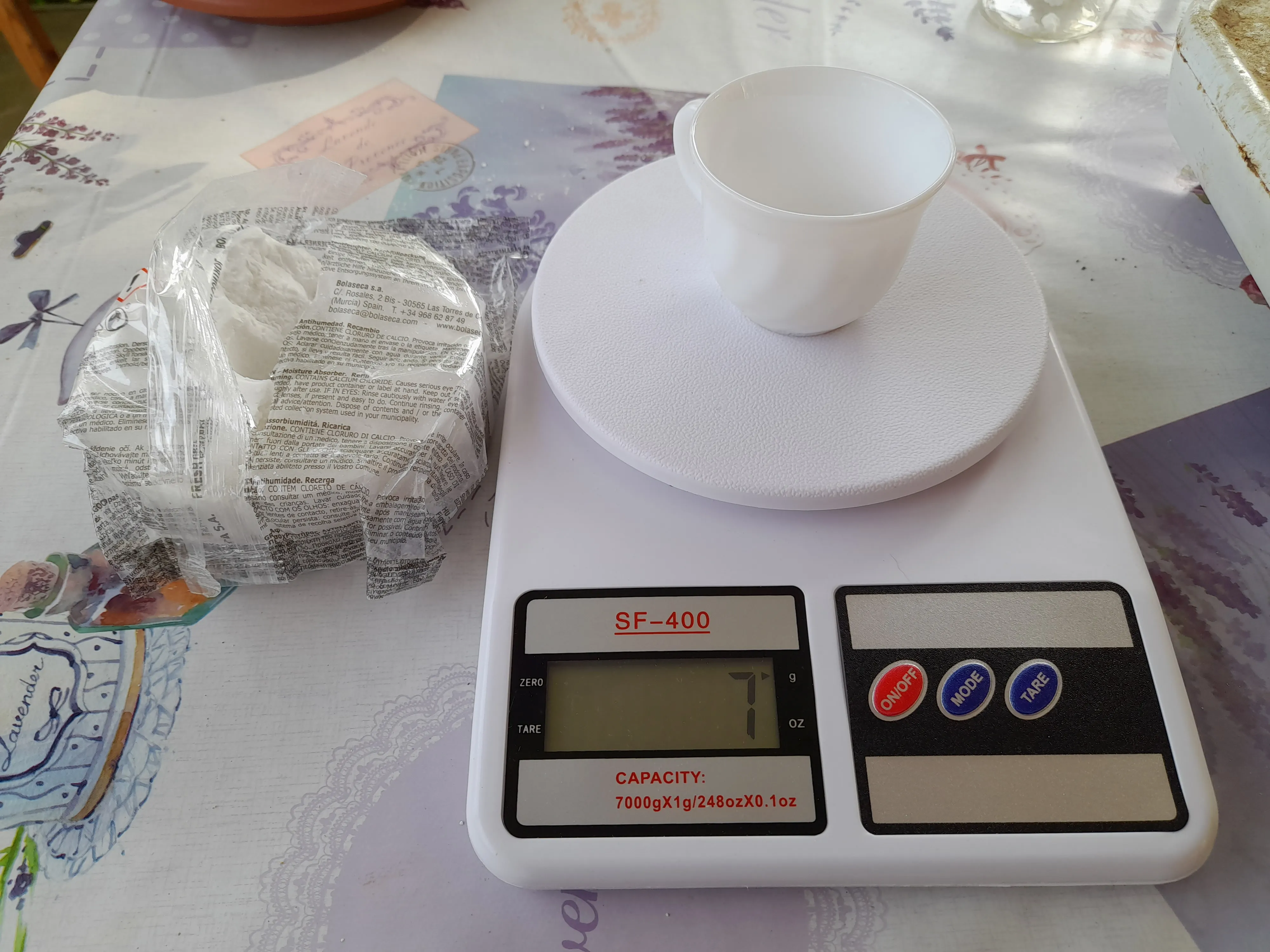
I started with 10g of tungsten (0.05439 mol). To complete the reaction, I needed an equal molar amount of $CaCl_2$ (6.0367g). I measured out 7g to ensure an excess. This excess is easily washed away later since $CaCl_2$ is water-soluble, while $CaWO_4$ is not.
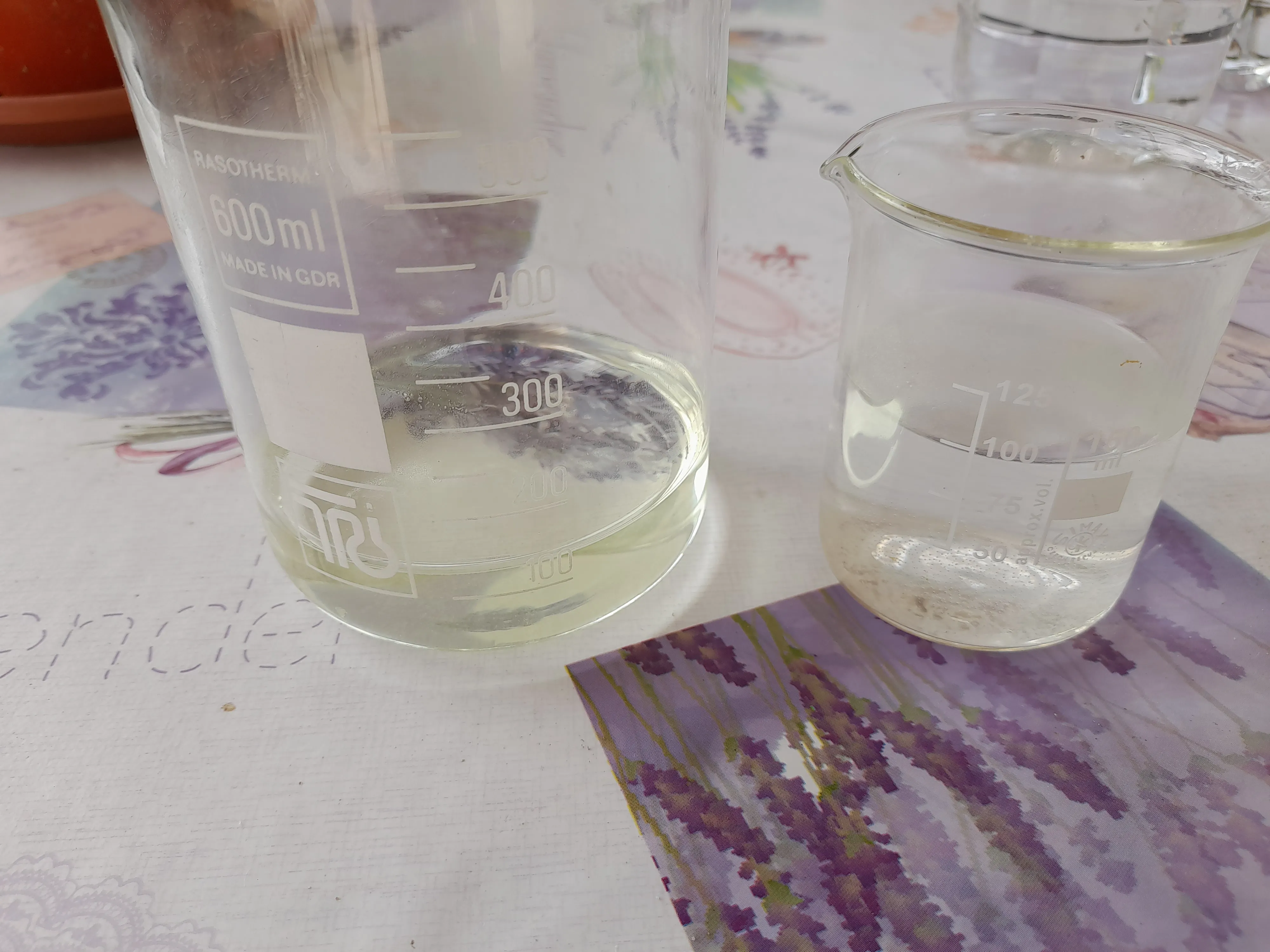
Here are the two solutions. The $Na_2WO_4$ had a slight yellowish tint, and the $CaCl_2$ solution wasn't crystal clear either. I suppose one can't expect chemical grade purity from a dehumidifier! There's an extra material that we can add here to make our detector material much better. I will explain it in a later step when we are optimizing the detector material.
This is the precipitation step. It’s very simple: mix the two solutions, and $CaWO_4$ precipitates out as a white solid.
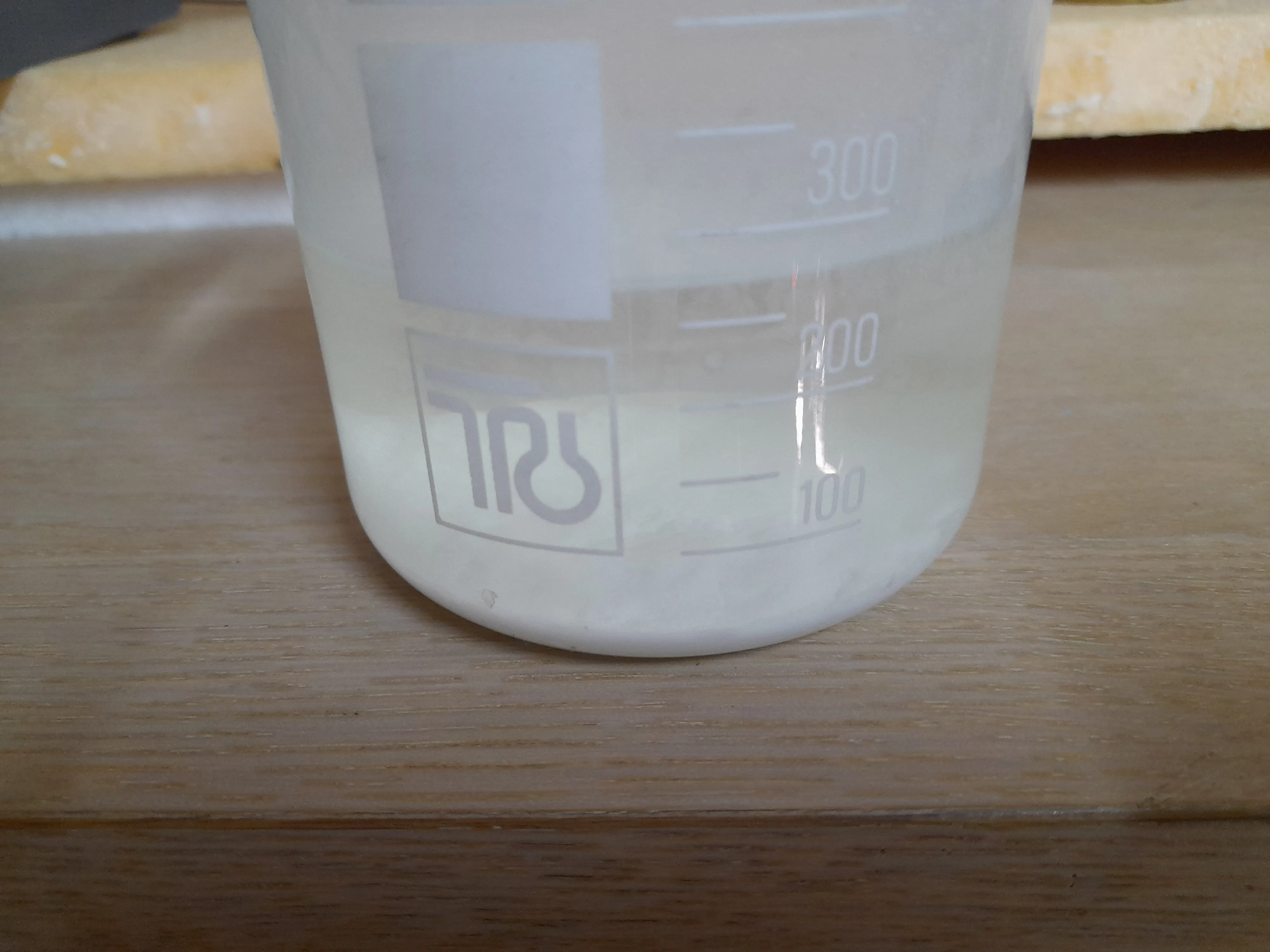
After precipitation, the $CaWO_4$ settles to the bottom. Carefully siphon off the liquid, add distilled water to wash the material, and siphon again. This removes any unreacted $CaCl_2$.
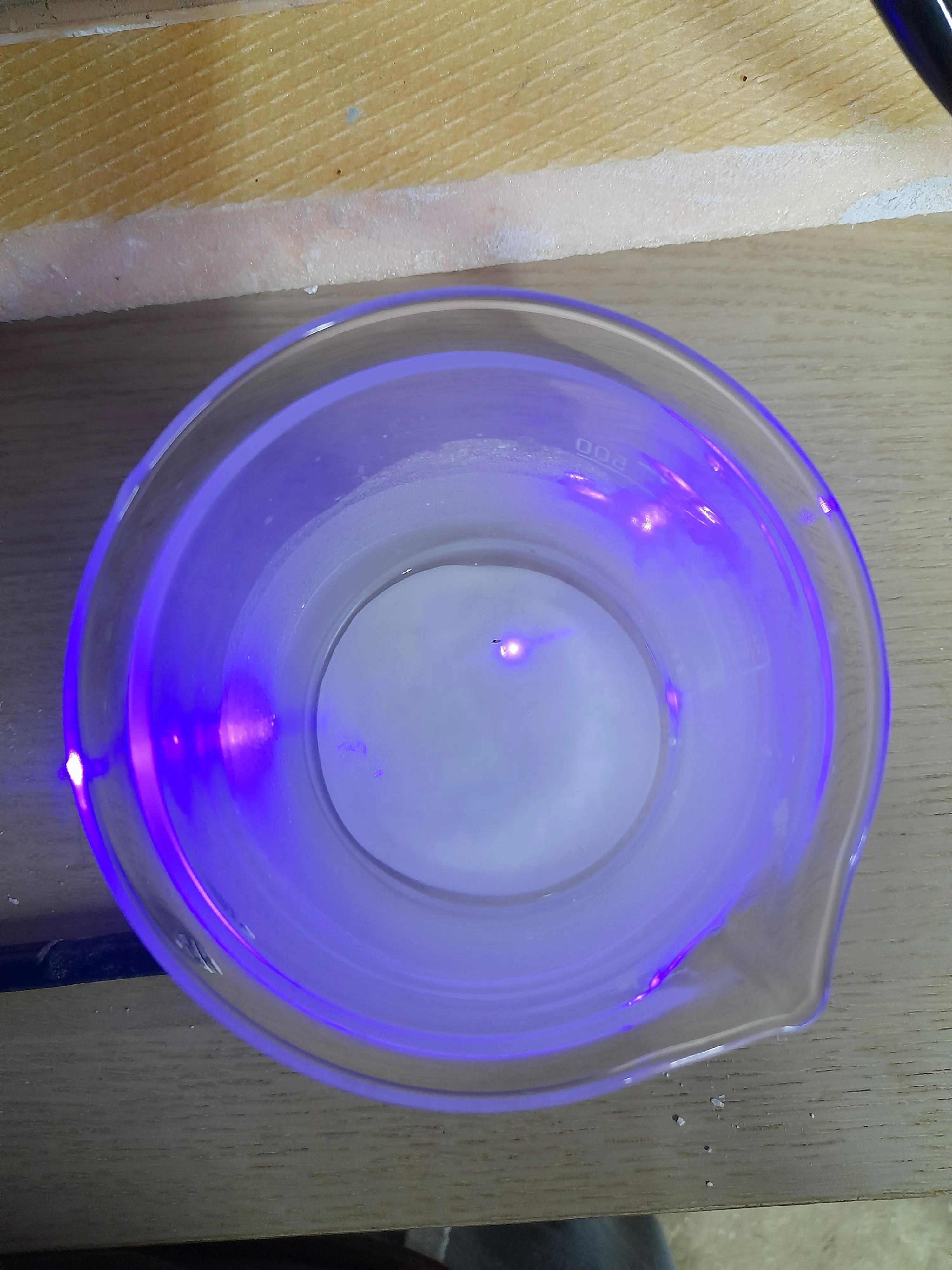
I tried to excite the $CaWO_4$ with UV light, but it showed no visible reaction.
After drying the material, I blasted it with an 80kV 1mA X-ray source. For those unfamiliar with the physics: the 80kV accelerating voltage determines the energy of the electrons hitting the anode—effectively defining the 'color/warmth' or hardness of the resulting X-ray photons—while the 1mA tube current represents the intensity or 'brightness.' For context, this is comparable to the power used in mammography, whereas a medical CT typically operates at 120kV and 100mA, and industrial welding inspection can reach 320kV at 10mA.
I placed the sample directly in the beam's path, close to the source, concentrating the radiation onto a 1cm² area. To my disappointment, there was no reaction—not even a faint glow. I was certain I had synthesized $CaWO_4$, yet it wasn't performing as expected. This setback led to a two-year hiatus; the problem remained at the back of my mind, and I spent those two years constantly looking for the potential causes of the failure. Projects rarely move in a straight line.
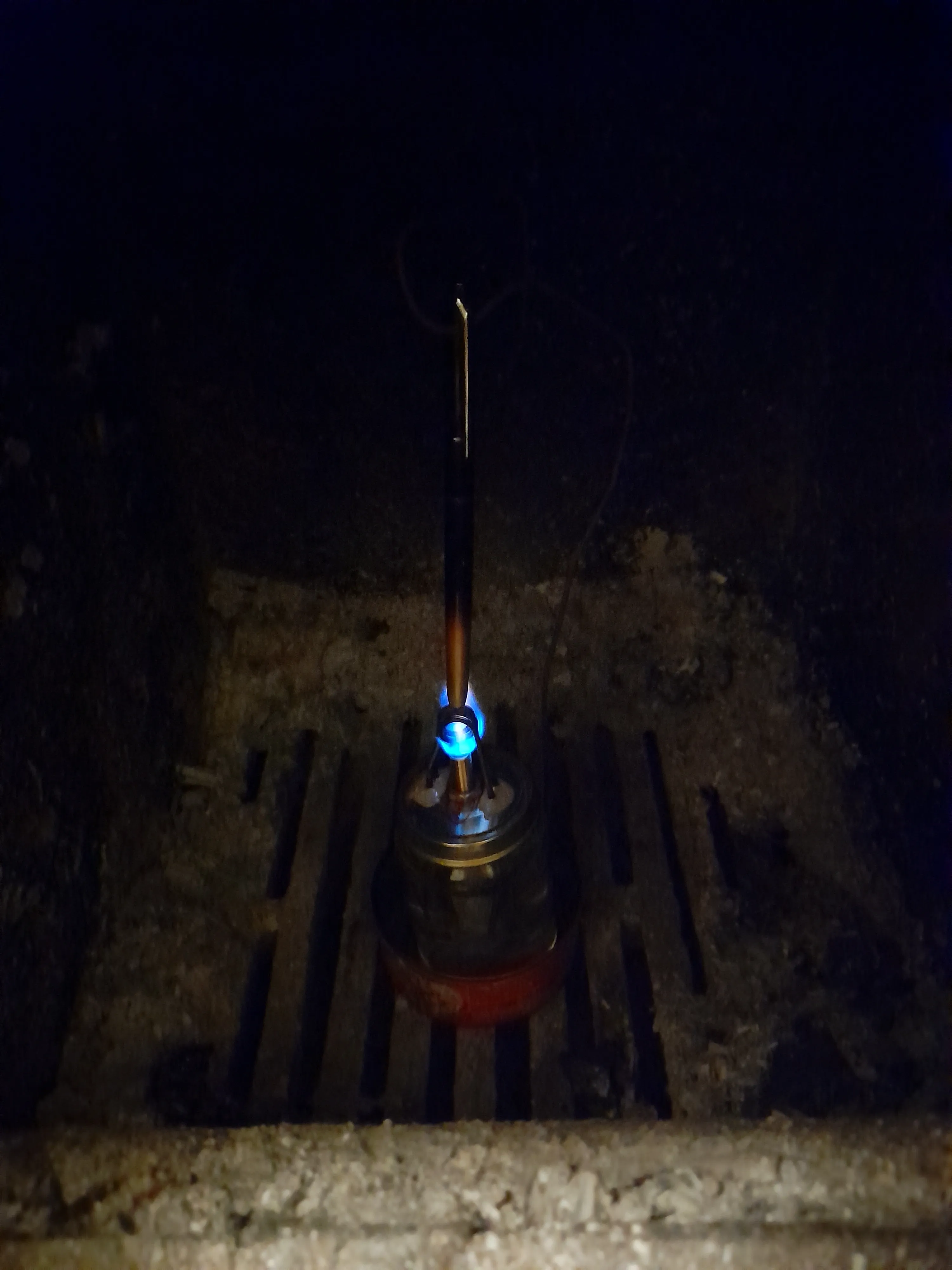
The missing detail, rarely mentioned, is that the chemical formula isn't everything—crystal structure matters. After precipitation, the material was amorphous or nanocrystalline and still contained water in the crystal structure. It requires annealing (heat treatment) to organize the crystals and dehydrate them completely. Literature suggested annealing at 600°C for 6-8 hours. To achieve this, I used a Bunsen-style alcohol burner, placing the $CaWO_4$ inside a metal tube directly in the flame. For safety, I set up this rig inside my furnace—the only place where I could safely leave an open flame unattended for such an extended period.
This was a huge breakthrough. In the video, you can see the powder start to glow blue at around the 21-second mark. It was faint, but a clear sign that it was working.
The next crucial step in enhancing the $CaWO_4$ X-ray sensitivity is doping. It is the intentional introduction of some specific impurities to the crystal lattice. While $CaWO_4$ is "self-activated" (it can glow without dopants), adding 1-2% lead (Pb) significantly improves its performance. Fortunately, lead is easy to find (I assume even airgun pellets would work), and it is much easier to handle than exotic rare earth metals or unobtanium dopants. However, the tricky part is getting this lead into the crystal structure.
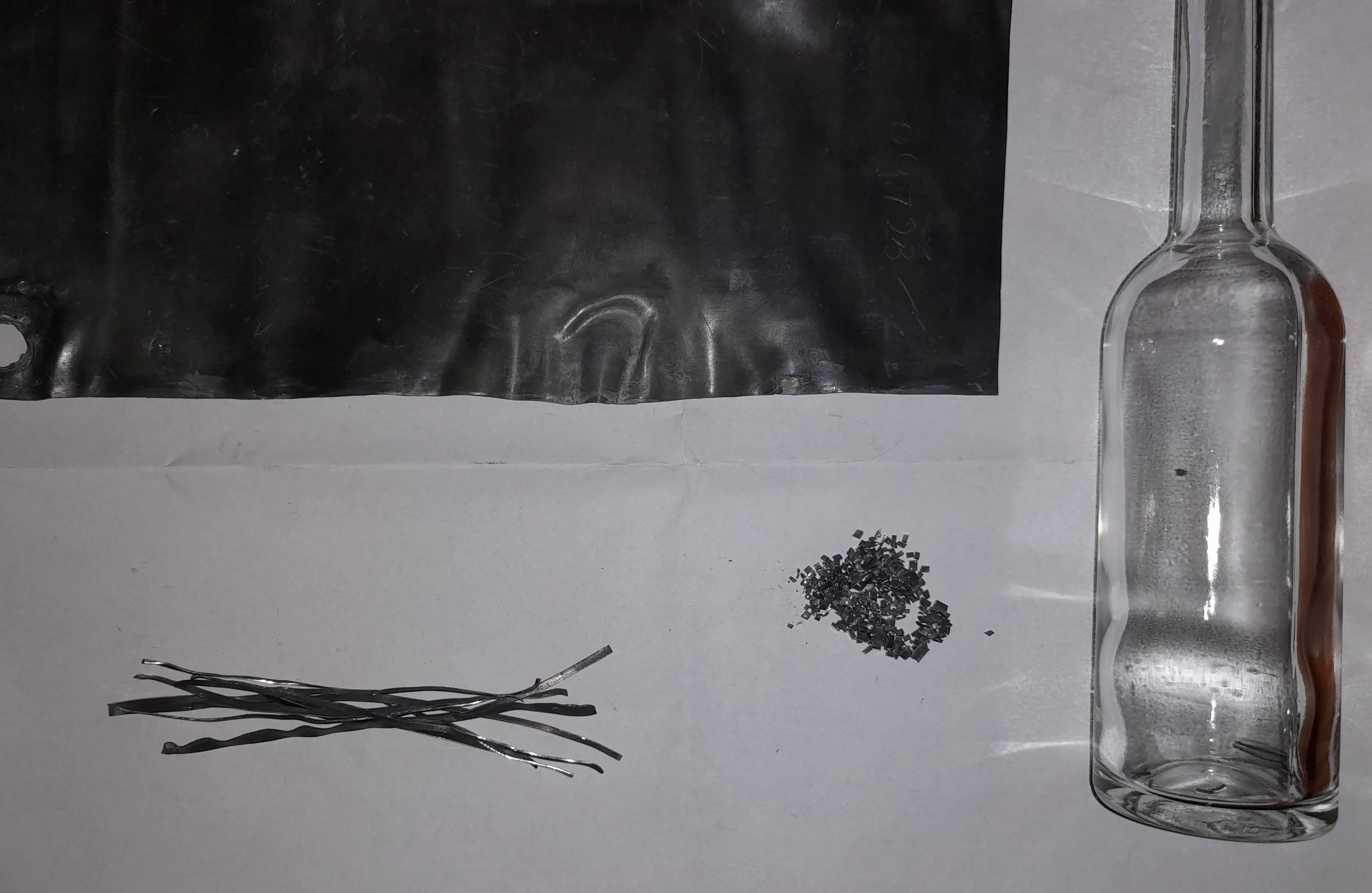
I decided to use $PbCl_2$ for the doping process. To produce it, I reacted thin lead sheets with hydrochloric acid ($HCl$), first cutting the metal into small pieces to maximize the surface area and accelerate the reaction. This step ensured a more efficient conversion of the metallic lead into the chloride form needed for the synthesis.
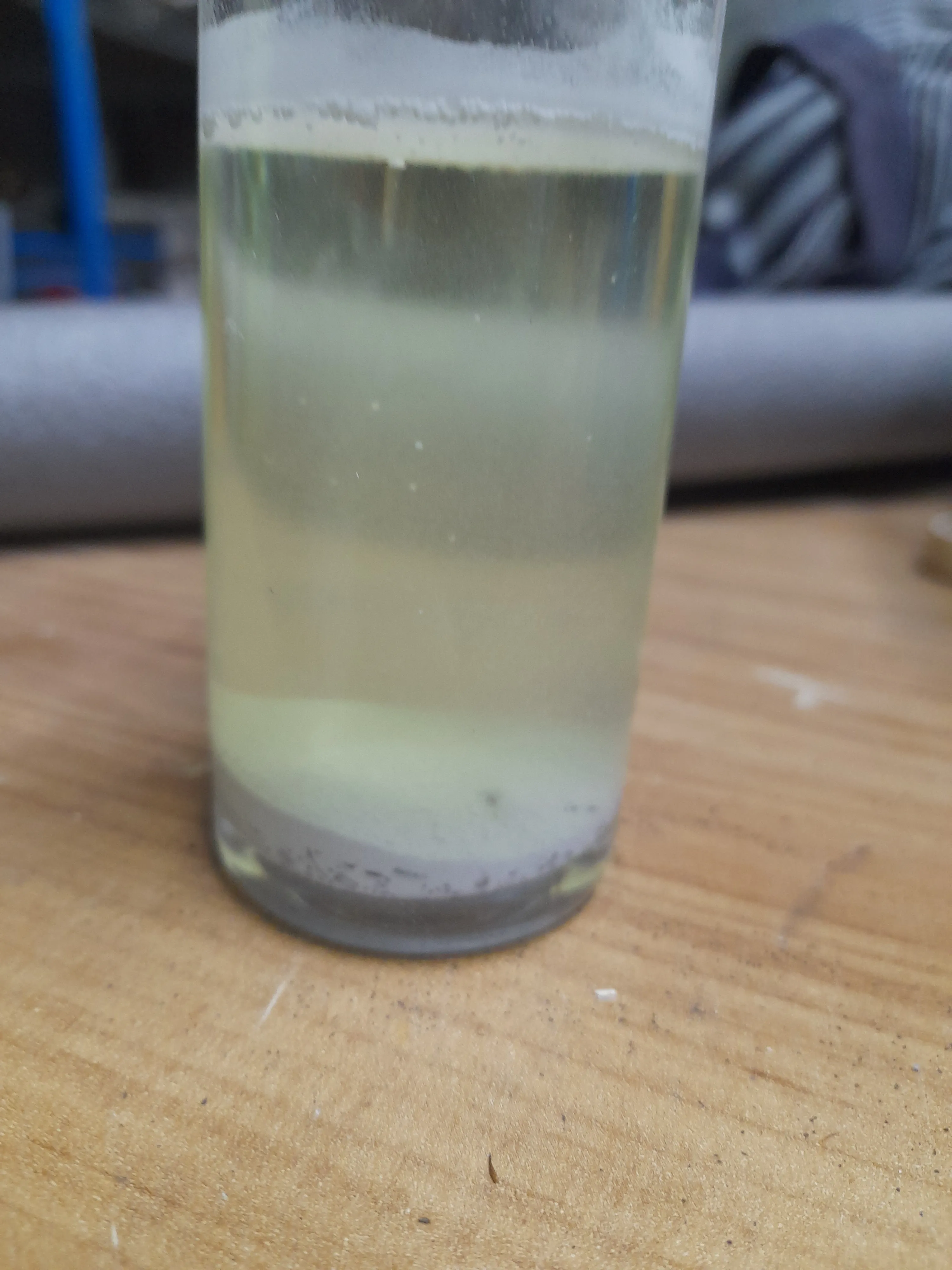
The acid reacts with the lead to form $PbCl_2$ and hydrogen gas. However, the $PbCl_2$ layer "passivates" the lead, protecting it from further acid attack. To overcome this, I had to shake the bottle vigorously every day to knock off the $PbCl_2$ layer. After 1-2 days, you can see the white material starting to form. About a week later, a significant amount of white $PbCl_2$ has accumulated.
Now you have to purify your $PbCl_2$ from the hydrochloric acid and any remaining lead pieces. To do this, you can take advantage of the fact that lead chloride is not very soluble in cold water. First, siphon off the liquid part, then add cold or room-temperature distilled water. Shake it well, and once the water has cleared, siphon it off again. You should repeat this rinsing step 2–3 times.
To get rid of the metallic lead, I took advantage of the fact that lead chloride is much more soluble in hot water. At 4°C, it dissolves at around 0.65g/100ml; at 20°C, it's about 1g/100ml; and at 100°C, it jumps to 3.34g/100ml. So, I boiled some distilled water and added it to the mixture of metal and $PbCl_2$. I stirred it to dissolve as much material as possible, then siphoned off the hot water into a separate container. As the water cools down, you will see clear crystals forming. Once cooled, you can siphon off the cold water, reheat it, and use it again to dissolve more $PbCl_2$ from the original container. You are finished when only the metallic lead remains in the first container. Now your clear crystals are in the second container with a bit of water. While you could siphon off this remaining water, remember that even cold water contains a small amount of lead chloride. This should be neutralized and must not enter natural waterways. To be safe, it is better to simply evaporate the remaining water instead of siphoning it off.
Now we have the clear $PbCl_2$ crystals. To give you an example of the math: I started with 10g of tungsten, which is 0.05439 mol. My goal is to create $CaWO_4$ crystals where one in every hundred tungsten atoms is replaced by a lead atom—that’s a 1% doping. The molar mass of $PbCl_2$ is 278.1 g/mol. To match the 0.05439 mol of tungsten, you would need 15.13g of $PbCl_2$, but since we only need a 1% dose, 0.15g is the amount to measure out. Here comes the trick I mentioned earlier, which happens just before precipitating the $CaWO_4$ from the $Na_2WO_4$ and $CaCl_2$ solutions: First, heat up your $CaCl_2$ solution and add the $PbCl_2$ dopant to it. Make sure all the $PbCl_2$ is completely dissolved; if it isn't, add a bit more heat or a little more water. Once dissolved, you can mix this combined $CaCl_2$ + $PbCl_2$ solution with the $Na_2WO_4$ solution. The $CaWO_4$ that precipitates this way is now doped with lead. Just like before, you have to wash and dry the precipitate, and then perform the annealing heat treatment for this doped batch.
The lead-doped Calcium Tungstate works remarkably well as an X-ray detector. After annealing, I placed it back in front of the X-ray source using the same settings as before. With the doping, you can now see a faint blue glow even in a dimly lit room. It is difficult to capture the full effect on camera, but for comparison: without the doping, my camera could only detect the blue light in total darkness. This confirms that the lead integration significantly boosted the material's sensitivity.
I recorded this video in total darkness to compare the doped and undoped materials. However, I believe the Automatic Gain Control (AGC) on my camera is masking the real difference. The camera automatically boosts the sensitivity in the dark, which levels out the brightness on screen. In person, the contrast is much more obvious—the lead-doped $CaWO_4$ is significantly brighter and more reactive than the original batch.